
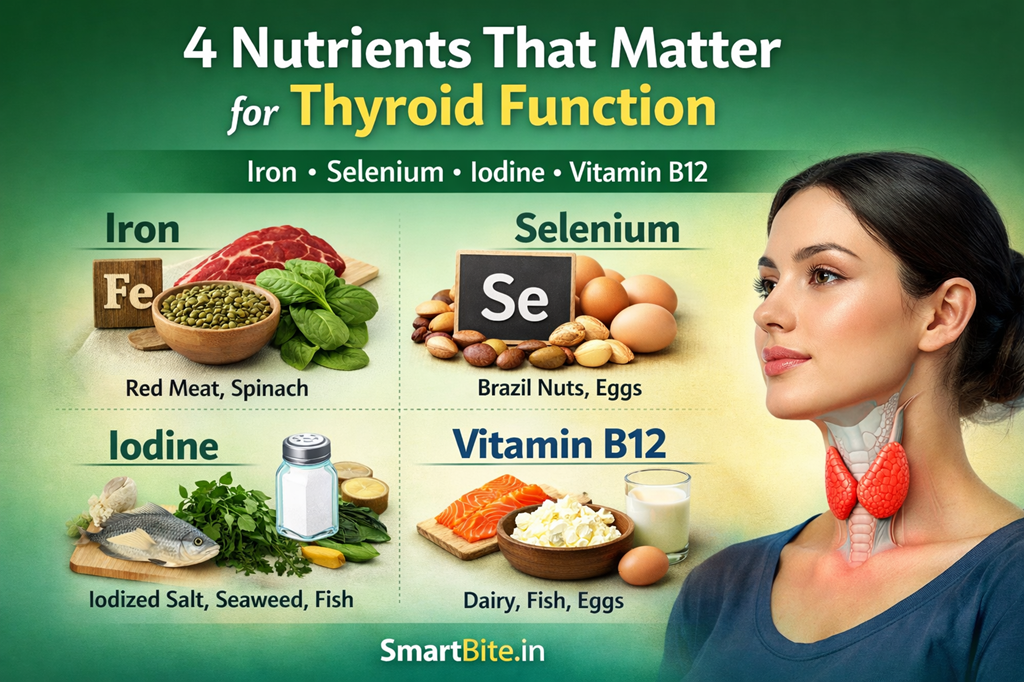
The thyroid may be small, but it plays a powerful role in regulating your body’s metabolism, energy levels, and overall hormonal balance. When thyroid function is disrupted, it can affect everything from weight and mood to heart rate and digestion. While many factors influence thyroid nutrition is one of the most important and often overlooked.
At SmartBite, we believe that food can be a powerful tool for supporting hormonal balance. Let’s take a closer look at four key nutrients that are essential for optimal thyroid function: iron, selenium, iodine, and vitamin B12.
Iron: Supporting Hormone Production
Iron is crucial for the production of thyroid hormones. It helps the enzyme thyroid peroxidase function effectively, which is necessary for synthesizing hormones like T3 and T4.
Low iron levels can impair thyroid activity and may worsen symptoms like fatigue, weakness, and hair loss especially in individuals with hypothyroidism.
Food sources to include:
- Spinach and other leafy greens
- Lentils and legumes
- Pumpkin seeds
- Lean meats
Pairing iron-rich foods with vitamin C (like citrus fruits) can enhance absorption.
Selenium: Protecting the Thyroid
Selenium is a powerful antioxidant that helps protect the thyroid gland from oxidative stress. It also plays a key role in converting the inactive thyroid hormone (T4) into its active form (T3), which your body can use effectively.
Adequate selenium intake has been linked to improved thyroid function and reduced inflammation in certain thyroid conditions.
Food sources to include:
- Brazil nuts (one of the richest sources)
- Sunflower seeds
- Eggs
- Fish like tuna and sardines
A small amount goes a long way, so balance is key.
Iodine: The Building Block of Thyroid Hormones
Iodine is perhaps the most well-known nutrient for thyroid health and for good reason. It is an essential component of thyroid hormones. Without enough iodine, the body cannot produce sufficient T3 and T4.
However, both deficiency and excess iodine can disrupt thyroid function, so it’s important to maintain the right balance.
Food sources to include:
- Iodized salt
- Dairy products
- Seaweed
- Fish
In many regions, iodized salt helps meet daily iodine requirements.
Vitamin B12: Supporting Energy and Metabolism
Vitamin B12 is essential for energy production and nervous system health. Many individuals with thyroid disorders particularly hypothyroidism may also have low B12 levels.
A deficiency can contribute to fatigue, brain fog, and weakness, compounding the symptoms of thyroid imbalance.
Food sources to include:
- Dairy products
- Eggs
- Meat and poultry
- Fortified plant-based foods
For vegetarians or vegans, fortified foods or supplements may be necessary.
Why These Nutrients Matter Together
These four nutrients don’t work in isolation. They collectively support hormone production, activation, and overall metabolic balance. A deficiency in even one can disrupt thyroid function and impact how your body uses energy.
Smart Eating with SmartBite
At SmartBite Nutrition Bangalore, we design meals that prioritize nutrient density and balance ensuring your body gets the essential vitamins and minerals it needs to function at its best. By incorporating whole foods rich in iron, selenium, iodine, and B12, we help support not just thyroid health, but overall well-being.
Supporting your thyroid doesn’t have to be complicated. By focusing on key nutrients like iron, selenium, iodine, and vitamin B12, you can take meaningful steps toward better hormonal balance, improved metabolism, and sustained energy.
Small dietary changes can make a big difference because when your thyroid works well, your whole body benefits.