Quick answer
A PMOS (PCOS) diet for weight loss focuses on steady blood sugar, not eating less. Fill half your plate with vegetables, a quarter with protein (dal, paneer, eggs) and a quarter with whole grains like jowar, ragi or brown rice. Eat at regular times, limit sugar and maida, and pair food with daily walks and good sleep.
If you have PMOS (PCOS), you may have noticed that weight comes on easily and takes much longer to shift. You eat less, you walk more, and the scale barely moves. That is not a lack of willpower. PCOS changes how your body handles sugar, hunger and fat storage, so a generic “eat less” diet often doesn’t work.
The good news: the right food choices can make a real difference to weight, energy, cravings and cycles. In this guide, Dt. Nazish Akhtar, Dietitian & Nutritionist at SmartBite, explains how a PCOS-friendly diet works and shares a sample 7-day Indian meal plan, built around the dal, roti, rice and sabzi you already eat at home.
Use it as a starting point. Every woman with PCOS is different, so a plan made for your reports, routine and symptoms will always work better than a general chart.
Why weight loss is harder with PMOS (PCOS), and how diet helps
Many women with PCOS have insulin resistance: the body needs more insulin to manage blood sugar (WHO). High insulin makes it easier to store fat, especially around the waist, and can push up male hormones (androgens), which affects cycles, skin and hair.
A PCOS-friendly diet works on four things:
- Steadier blood sugar. Fibre, protein and whole grains release energy slowly, so you avoid sharp spikes and crashes.
- Fewer cravings. Regular, balanced meals keep hunger hormones calmer, so evening sugar cravings ease.
- Less inflammation. Vegetables, pulses, nuts, seeds and healthy fats help; fried and packaged foods add to it.
- Energy you can work with. When meals hold you through the day, it becomes easier to stay active and consistent.
This is why the focus is on what and when you eat, not just how little.
How to build a PMOS (PCOS)-friendly Indian plate
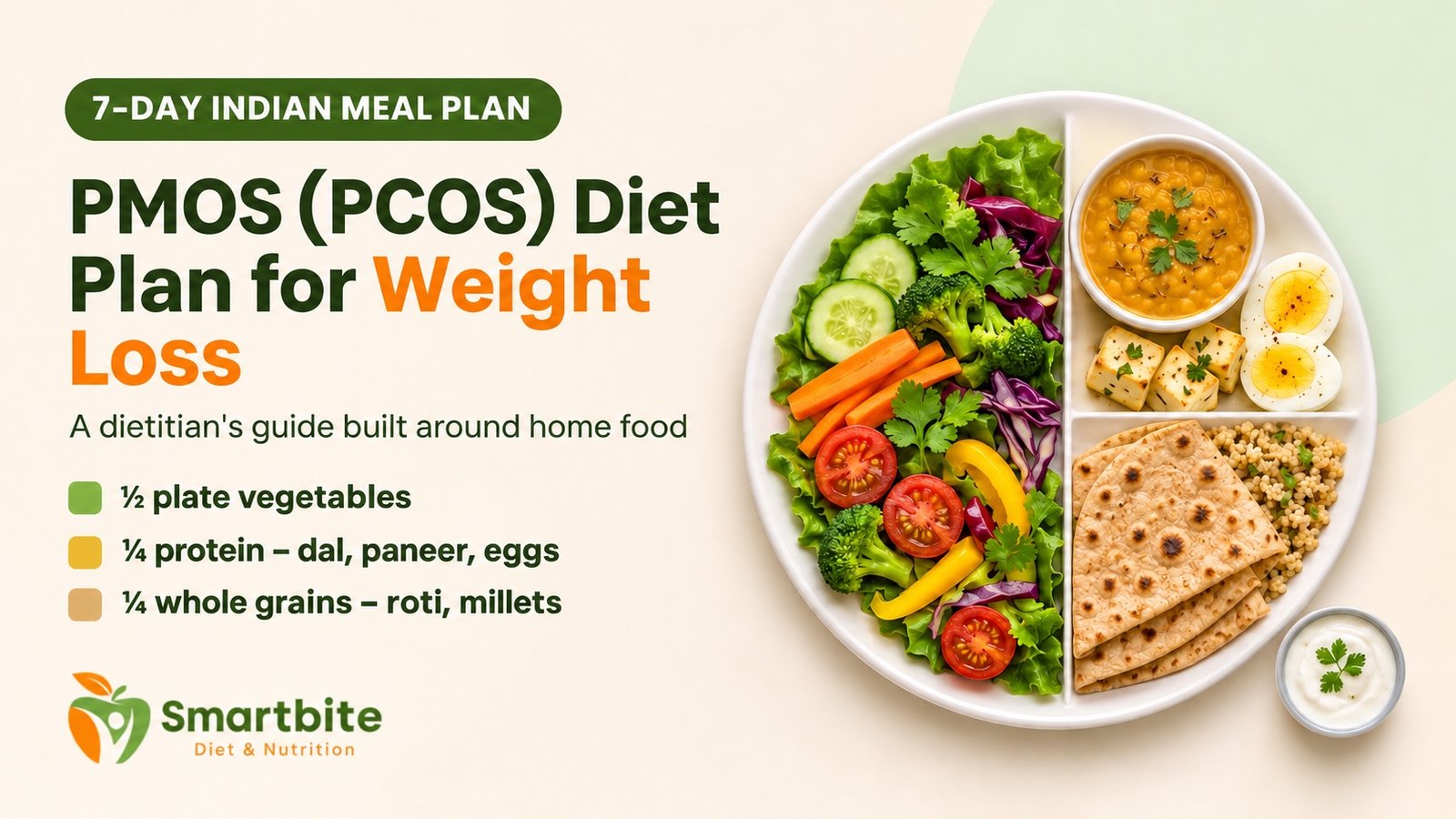
You don’t need special foods. Use your regular thali and change the proportions:
- Half the plate: vegetables. Sabzi, salad, a bowl of vegetable soup or raita.
- A quarter: protein. Dal, chana, rajma, paneer, curd, eggs, chicken or fish.
- A quarter: whole grains. One or two rotis (jowar, bajra, ragi or whole wheat), or a small bowl of rice, ideally with dal and vegetables.
- A little healthy fat. A teaspoon of ghee or oil, a few nuts or seeds.
Two simple rules make the plate work: eat protein at every meal, including breakfast, and avoid eating carbs on their own (for example, only poha, only biscuits, or only fruit juice).
Sample 7-day Indian PMOS (PCOS) meal plan (vegetarian)
Portions depend on your height, activity and goals, so treat this as a pattern, not fixed quantities. Start each day with water, and add a short walk after main meals if you can.
| Day | Breakfast | Mid-morning | Lunch | Evening snack | Dinner |
|---|---|---|---|---|---|
| Mon | Moong dal chilla with mint chutney | 1 guava or apple | 2 jowar rotis, palak dal, cucumber raita, salad | Roasted chana + green tea | Vegetable khichdi (more dal, less rice) with curd |
| Tue | Vegetable oats upma with a bowl of curd | Handful of almonds and walnuts | Small bowl brown rice, rajma, mixed vegetable sabzi, salad | Buttermilk + sprouts chaat | 2 rotis, paneer bhurji, lauki sabzi |
| Wed | 2 besan chillas with vegetables | 1 orange | 2 multigrain rotis, chana dal, bhindi sabzi, salad | Makhana (roasted) + herbal tea | Vegetable soup + paneer tikka with salad |
| Thu | Ragi dosa with sambar | Pear or papaya bowl | Small bowl rice, sambar, cabbage poriyal, curd | Peanut chaat with onion and tomato | 2 bajra rotis, mixed dal, beans sabzi |
| Fri | Vegetable poha with peanuts + a bowl of curd | Coconut water | 2 rotis, kala chana curry, carrot-beans sabzi, salad | Sprouts salad | Dalia (broken wheat) vegetable khichdi with raita |
| Sat | Paneer-stuffed multigrain paratha (light ghee) + curd | 1 apple | Small bowl brown rice, dal tadka, palak sabzi, salad | Roasted seeds mix (flax, pumpkin, sunflower) | Moong dal soup + vegetable stir-fry with tofu |
| Sun | Idli with sambar and coconut chutney | Handful of nuts | 2 jowar rotis, rajma, mixed vegetable raita, salad | Buttermilk + roasted chana | Vegetable soup + 2 besan chillas |
If you take medicines for PCOS, thyroid or diabetes, check meal timings with your doctor. Looking for a general plan instead? See our 7-day diet plan for weight loss.
Non-vegetarian swaps
If you eat eggs, chicken or fish, swap them in for some of the vegetarian proteins above:
| Instead of | Try |
|---|---|
| Moong dal or besan chilla (breakfast) | 2-egg vegetable omelette or egg bhurji with 1 multigrain roti |
| Paneer bhurji (dinner) | Grilled or tandoori chicken with sauteed vegetables |
| Rajma or chana (lunch) | Fish curry (less oil) with a small bowl of rice and salad |
| Paneer tikka (dinner) | Chicken tikka or grilled fish with a large salad |
| Sprouts (snack) | 2 boiled eggs |
Keep the cooking simple: grilled, steamed, baked or home-style curries with less oil. Limit fried chicken, processed meats and heavy cream-based gravies.
Foods to include and foods to limit
| Include often | Limit |
|---|---|
| Dals, chana, rajma, sprouts | Sugar, sweets, mithai |
| Jowar, bajra, ragi, oats, brown rice, whole wheat | Maida: white bread, biscuits, bakery items |
| Green leafy vegetables, gourds, beans, cabbage, cauliflower | Fried snacks: samosa, pakoda, chips |
| Curd, buttermilk, paneer | Sweetened drinks, packaged juices, soft drinks |
| Eggs, chicken, fish (if you eat them) | Large portions of white rice on their own |
| Nuts and seeds: almonds, walnuts, flax, pumpkin seeds | Processed and packaged foods, instant noodles |
| Whole fruits: guava, apple, pear, orange, papaya | Fruit juices and very sweet fruits in large amounts |
You don’t need to cut rice or roti completely. Choose the whole-grain version where you can, keep the portion moderate, and always eat it with dal or vegetables.
Habits that make the plan work
Food is the biggest lever, but these habits decide whether it keeps working:
- Regular meal times. Long gaps followed by a big meal make blood sugar swing. Aim for 3 meals and 1–2 planned snacks.
- Daily movement. A 10–15 minute walk after lunch and dinner helps your body use sugar better. Add strength exercises 2–3 times a week if you can.
- Sleep. Poor sleep increases cravings the next day. Try to sleep and wake at similar times.
- Stress. Stress affects hormones and appetite. Even 10 minutes of yoga or deep breathing helps.
- Track more than the scale. Notice your waist, energy, cravings, sleep and cycles. Many changes show up before the weight does.
Why a personalised plan works better
A sample plan is a good start, but PCOS looks different in every woman. Your plan should match:
- Your blood reports: sugar, insulin, thyroid, vitamin D and B12, lipids
- Your symptoms: irregular cycles, acne, hair fall, fatigue, cravings
- Your routine: work hours, travel, family meals, festivals
- Your food: vegetarian or non-vegetarian, regional favourites, what you actually enjoy
At SmartBite, Dt. Nazish Akhtar builds PMOS (PCOS) plans around your reports and your home food, with regular follow-ups to adjust as you progress. Consultations are available at our Akshayanagar clinic in Bangalore or online.
Learn about our PMOS (PCOS) diet programme →
Related reading: What happens in a 12-week dietitian-led weight loss programme · How to choose the best Dietitian & Nutritionist in Bangalore · Weight loss programme
Frequently asked questions
Yes. It may take longer than for someone without PCOS, but steady weight loss is possible with the right food, regular movement and enough sleep. Even a small loss can help with cycles, energy and cravings. A dietitian-led programme helps you adjust the plan when progress slows.
No. Choose whole grains where you can, keep portions moderate, and eat rice or roti with dal, vegetables and protein rather than on their own.
Not for most women. Curd, buttermilk and paneer are good protein sources. If dairy seems to worsen your acne or digestion, discuss it with your dietitian rather than cutting it out on your own.
Most women do well with 3 main meals and 1–2 planned snacks at regular times. Long gaps often lead to overeating later.
Yes. The 7-day plan above is fully vegetarian, with dals, pulses, paneer, curd and sprouts for protein.
Only if your reports show a need and your doctor or dietitian recommends them. Don’t start supplements on your own.
Author: Dt. Nazish Akhtar, Dietitian & Nutritionist, specialised in PMOS (PCOS) nutrition, 5,000+ clients guided. Last reviewed: November 2026.
This article is for general information and does not replace medical advice. Please speak to your doctor about medicines or medical conditions before changing your diet.
Sources: World Health Organization – Polycystic ovary syndrome fact sheet · Better Health Channel (Victoria) – Polycystic ovarian syndrome
