Thyroid disorders are becoming increasingly common, affecting people of all ages. Conditions such as hypothyroidism (underactive thyroid) and hyperthyroidism (overactive thyroid) can impact metabolism, energy levels, weight, mood, digestion, and overall health. While medications prescribed by your doctor are the primary treatment, many people ask an important question: Can diet help control thyroid problems?
The answer is yes—but with an important clarification. Diet alone cannot cure thyroid disorders, but the right nutrition can support thyroid function, improve symptoms, maintain a healthy weight, and enhance your overall quality of life.
If you’re looking for a Dietitian in Bangalore or an experienced Thyroid Nutritionist in Bangalore, personalized nutrition counseling can help you manage your thyroid condition more effectively.
Understanding Thyroid Disorders
The thyroid gland produces hormones that regulate your body’s metabolism. When hormone levels become too low or too high, it can affect almost every organ in the body.
Common Thyroid Conditions
- Hypothyroidism
- Hyperthyroidism
- Hashimoto’s Thyroiditis
- Graves’ Disease
Common symptoms include:
- Weight gain or weight loss
- Fatigue
- Hair fall
- Dry skin
- Mood changes
- Poor concentration
- Constipation
- Irregular menstrual cycles
- Low energy
Proper medical treatment combined with a balanced thyroid diet plan can help manage these symptoms.
Can Diet Really Help?
Yes. A healthy diet supports thyroid health by providing essential nutrients required for hormone production and metabolism.
Good nutrition can help:
- Support healthy thyroid hormone production
- Improve metabolism
- Maintain healthy body weight
- Increase energy
- Reduce inflammation
- Improve digestion
- Support immunity
- Enhance overall wellness
However, it is important to continue taking thyroid medication exactly as prescribed by your doctor.
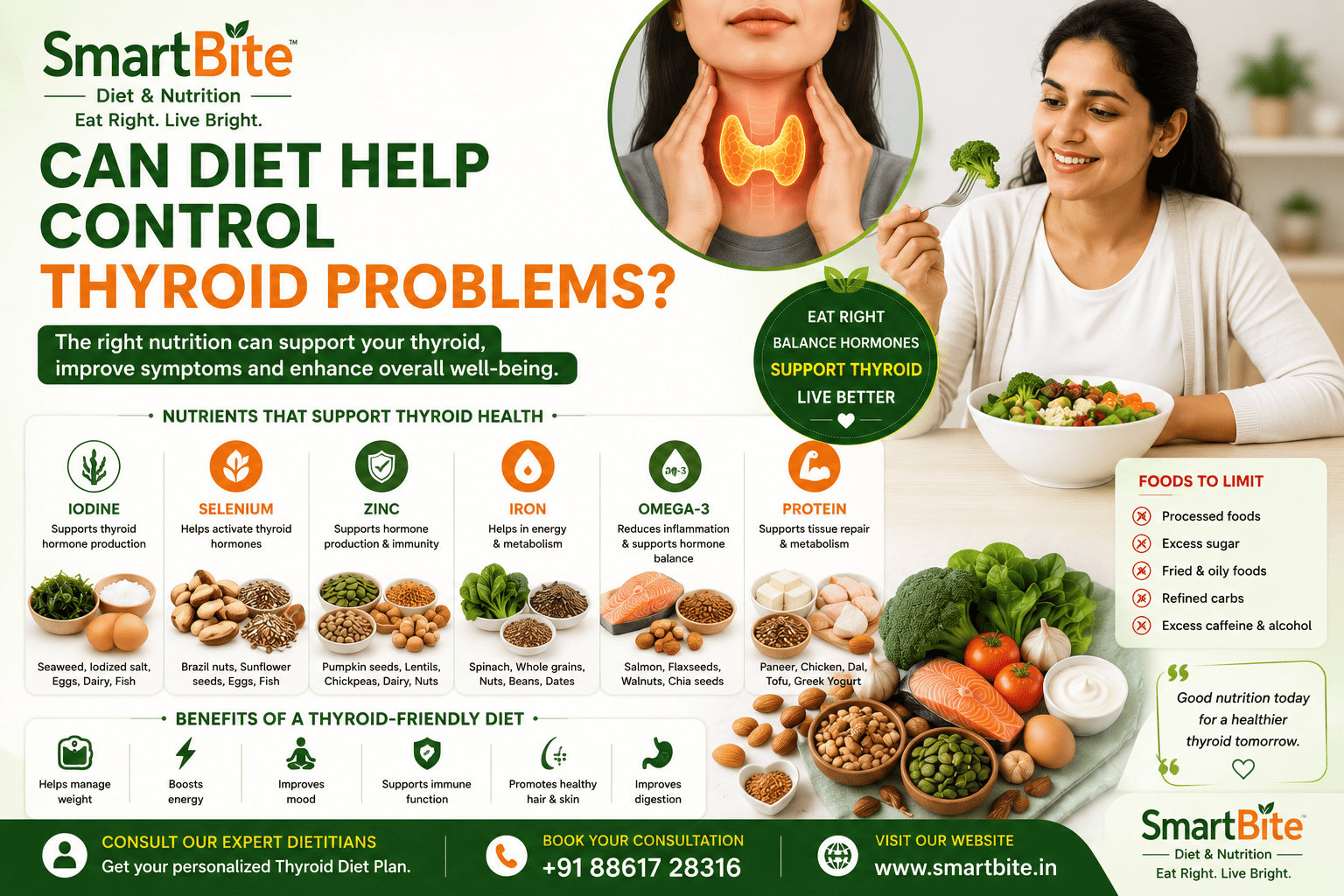
Best Foods for Thyroid Health
- Iodine-Rich Foods
Iodine is necessary for thyroid hormone production.
Healthy sources include:
- Iodized salt
- Fish
- Eggs
- Dairy products
Consume iodine in moderation, as excessive intake may also affect thyroid function.
- Selenium-Rich Foods
Selenium helps activate thyroid hormones and protects thyroid cells.
Include:
- Brazil nuts
- Sunflower seeds
- Eggs
- Chicken
- Fish
- Whole grains
- Zinc-Rich Foods
Zinc supports thyroid hormone production and immune health.
Good sources include:
- Pumpkin seeds
- Lentils
- Chickpeas
- Dairy
- Lean meat
- Protein-Rich Foods
Protein helps maintain muscle mass and supports metabolism.
Healthy choices include:
- Paneer
- Eggs
- Fish
- Chicken
- Tofu
- Greek yogurt
- Dal
- Sprouts
- Fruits and Vegetables
Fresh fruits and vegetables provide antioxidants that help reduce inflammation.
Choose:
- Apples
- Berries
- Guava
- Papaya
- Oranges
- Spinach
- Carrots
- Bottle gourd
- Healthy Fats
Healthy fats support hormone balance.
Include:
- Almonds
- Walnuts
- Flaxseeds
- Chia seeds
- Olive oil
Foods to Limit
People with thyroid disorders should reduce:
- Highly processed foods
- Sugary drinks
- Fried foods
- Excess sweets
- Ultra-processed snacks
- Excess alcohol
Some people may also be advised to moderate soy products or consume cruciferous vegetables like cabbage and broccoli in cooked form, depending on their condition.
Can Diet Help with Weight Gain in Hypothyroidism?
Many people with hypothyroidism struggle with weight gain due to a slower metabolism.
A personalized thyroid diet plan combined with regular exercise can help:
- Improve metabolism
- Control calorie intake
- Preserve muscle mass
- Support gradual and sustainable weight loss
- Improve energy levels
Crash diets should be avoided because they may worsen nutritional deficiencies.
Lifestyle Habits That Support Thyroid Health
Along with healthy eating:
- Take medication on time.
- Exercise regularly.
- Stay physically active.
- Drink enough water.
- Sleep 7–8 hours daily.
- Manage stress through yoga or meditation.
- Monitor thyroid levels regularly.
- Attend regular medical check-ups.
These habits work together to improve thyroid management.
How SmartBite Diet & Nutrition Can Help
At SmartBite Diet & Nutrition, our experienced Dietitians and Nutritionists in Bangalore create personalized nutrition plans for individuals with thyroid disorders.
Our services include:
- Personalized Thyroid Diet Plans
- Weight Loss Programs
- Diabetes Nutrition
- PCOS Nutrition
- Pregnancy Nutrition
- Healthy Lifestyle Counseling
- Clinical Nutrition Consultation
Every meal plan is customized based on your thyroid condition, health goals, lifestyle, food preferences, and medical history.
Why Choose SmartBite?
People across Bangalore choose SmartBite because we offer:
- Experienced Dietitians
- Personalized Nutrition Plans
- Practical Indian Meal Plans
- Online and In-Clinic Consultations
- Evidence-Based Nutrition Advice
- Continuous Progress Monitoring
- Sustainable Lifestyle Solutions
Our goal is to help you build healthier eating habits that support long-term thyroid health.
Conclusion
So, can diet help control thyroid problems? Absolutely. While diet cannot replace medical treatment, it plays a crucial role in managing symptoms, supporting hormone function, improving metabolism, and maintaining overall health.
If you’re searching for a trusted Dietitian in Bangalore, Nutritionist in Bangalore, or Thyroid Dietitian in Bangalore, SmartBite Diet & Nutrition offers personalized guidance to help you manage your thyroid condition with confidence and achieve lasting wellness.