
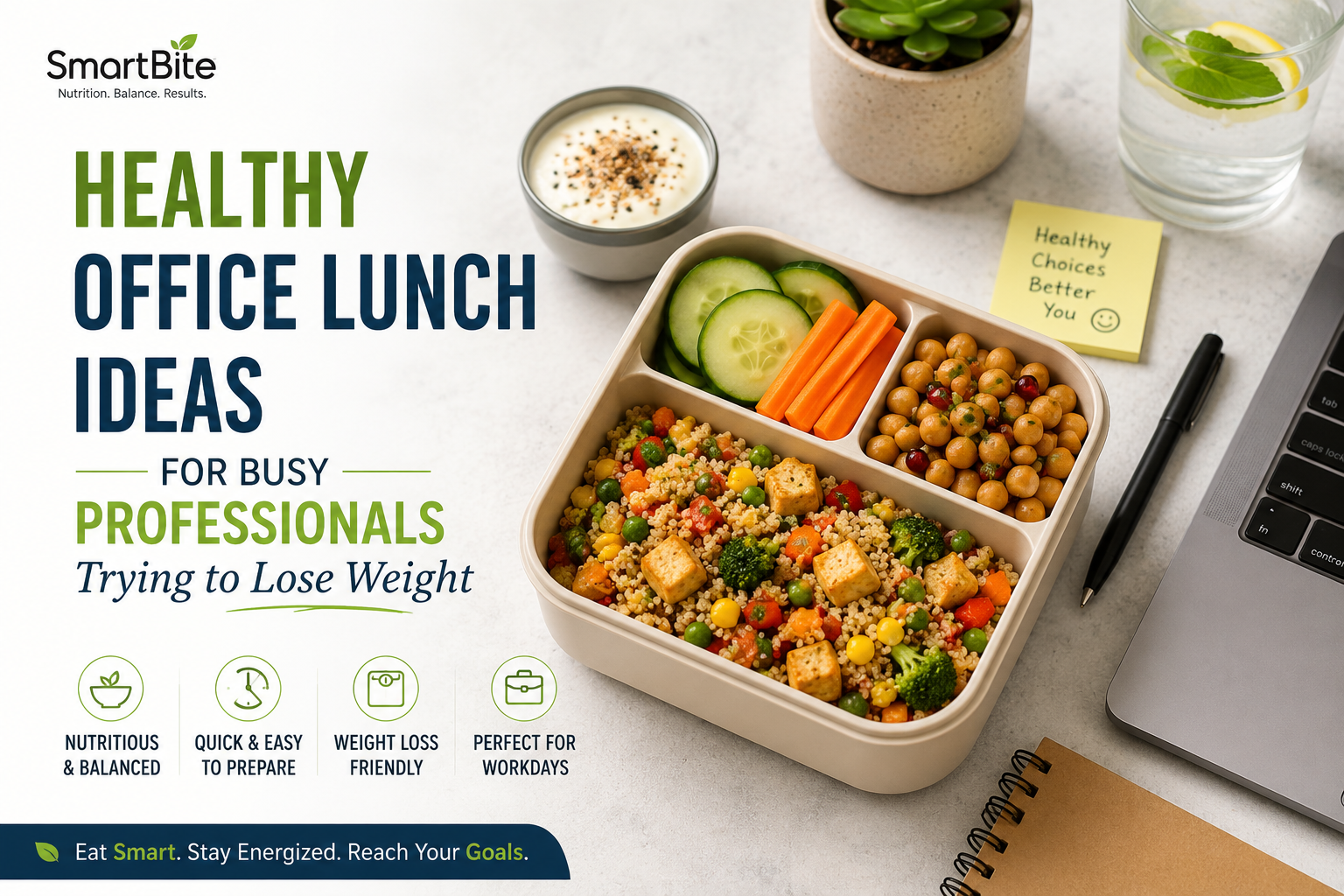
For busy professionals, lunch is often the most difficult meal of the day. Tight deadlines, meetings, travel, and limited food options can make it easy to order fast food or skip meals. However, planning a healthy office lunch can make weight management easier while helping you stay full and energized.
A good weight-loss lunch does not need to be boring or complicated. The simple goal is to include a balance of protein, fibre-rich carbohydrates, vegetables, and healthy fats, while keeping portions suitable for your individual needs.
Why Is a Healthy Office Lunch Important?
A balanced lunch can help you avoid extreme hunger later in the day. When you are very hungry, you may be more likely to choose large portions, sugary snacks, or highly processed foods. Research-based healthy eating guidance commonly recommends building meals around vegetables, whole grains, and healthy protein sources.
Here are some easy lunch ideas that can fit into a busy workday.
1. Vegetable and Paneer Roti Wrap
A whole-wheat roti wrap is easy to prepare and carry to the office. Fill it with grilled paneer, cucumber, carrots, capsicum, lettuce, and a light curd-based dressing.
This combination provides protein and vegetables while keeping the meal simple and filling.
2. Dal, Brown Rice and Vegetable Bowl
This is a simple Indian lunch option. Pack:
- A suitable portion of brown rice or another whole grain
- Dal or another pulse
- A large serving of mixed vegetables
- Salad or curd
Beans and lentils can provide both protein and fibre, while whole grains and vegetables can be part of a balanced meal. (nhs.uk)
3. Quinoa or Millet Salad Bowl
Prepare a bowl with quinoa or millet, plenty of vegetables, and a protein source such as paneer, tofu, chickpeas, eggs, chicken, or fish.
Add lemon, herbs, and a small amount of healthy fat such as nuts or seeds for flavour.
4. Grilled Chicken and Vegetable Lunch Box
For non-vegetarians, grilled chicken can be paired with:
- Stir-fried vegetables
- Salad
- A suitable portion of brown rice or whole-wheat roti
Avoid turning a healthy lunch into a high-calorie meal by using too much creamy sauce, mayonnaise, butter, or oil.
5. Chickpea or Rajma Salad
Chickpeas and rajma are convenient options for a filling office lunch. Mix cooked chickpeas or rajma with cucumber, tomato, onion, carrots, coriander, and lemon.
You can add a small portion of whole grains or a whole-wheat roti if needed. Preparing the ingredients in advance can save time during busy weekdays.
6. Vegetable Khichdi with Curd
Khichdi can be a comforting and practical lunch when prepared with dal, vegetables, and a suitable amount of rice or millet.
Add vegetables such as carrots, beans, peas, spinach, or bottle gourd. Serve with plain curd and salad for a more balanced meal.
7. Egg and Whole-Wheat Roti Roll
A simple egg roll can be prepared in just a few minutes. Use eggs, vegetables, and a whole-wheat roti.
You can prepare the filling the night before and pack it in the morning. This is a useful option for professionals who do not have much time for cooking.
8. Tofu or Paneer Buddha Bowl
A Buddha bowl can include several healthy foods in one lunch box:
- Leafy greens or other vegetables
- Tofu or paneer
- Chickpeas or beans
- A suitable portion of quinoa, brown rice, or millet
- Seeds or a small amount of nuts
The exact portion should depend on your calorie needs, activity level, and weight-loss goals.
9. Whole-Wheat Sandwich with Protein
Choose whole-grain bread and add a protein source such as paneer, egg, chicken, hummus, or tofu.
Add plenty of cucumber, tomato, lettuce, and other vegetables. Try to limit excess cheese, butter, and mayonnaise.
10. Leftover Dinner Can Become Tomorrow’s Lunch
Healthy office lunches do not always require cooking a separate meal.
If dinner includes vegetables, protein, and a suitable portion of carbohydrates, you can pack a portion for lunch the next day. This can save time and reduce the temptation to order unhealthy food.
A Simple Formula for Building Your Office Lunch
A useful way to plan a balanced meal is to divide your plate into:
Half: Non-starchy vegetables or salad
One-quarter: Protein such as dal, beans, tofu, paneer, eggs, fish, or lean chicken
One-quarter: Quality carbohydrates such as whole grains, brown rice, whole-wheat roti, or other suitable carbohydrate foods
This type of plate method is a simple guide for creating balanced meals and managing portions.
Tips for Busy Professionals Trying to Lose Weight
Plan Your Lunch the Night Before
Prepare vegetables, cook protein sources, or pack leftovers in advance. When a healthy lunch is ready, you are less likely to make a last-minute food choice.
Include Protein
Protein-rich foods can help make meals more satisfying and can support muscle health during weight loss.
Add More Vegetables
Vegetables can add volume and fibre to your meal without adding as many calories as many high-fat or highly processed foods. Try to include different vegetables during the week. (American Diabetes Association)
Watch Portion Sizes
Even nutritious foods can contribute more energy than you need when portions are very large. Weight loss usually requires an overall energy deficit, but the right calorie intake varies from person to person. (nhs.uk)
Choose Water Instead of Sugary Drinks
Sweetened drinks can add extra calories without making you feel full. Water is a simple choice to include with your office lunch.
Do Not Follow Extreme Diets
Skipping entire food groups or following very restrictive diets may not be necessary for sustainable weight management. A balanced eating pattern that fits your lifestyle is often easier to maintain.
How a Dietitian Can Help With Weight Loss
There is no single lunch plan that works for everyone. Your food requirements can depend on your age, activity level, work schedule, health conditions, food preferences, and weight goals.
If you are searching online for the best dietician in Bangalore for weight loss, it is important to look for qualified nutrition professionals who can provide a personalized and practical eating plan instead of promoting extreme diets or quick fixes.
Working with the best dietitian in Bangalore can help you understand suitable portions, meal timing, protein needs, and healthier food choices that fit your daily routine.
At Smartbite Nutrition, the focus can be on creating realistic meal plans that work with Indian food, busy schedules, and long-term health goals.
Final Thoughts
Losing weight does not mean eating plain salads every day or spending hours cooking. A healthy office lunch can be as simple as dal and vegetables, a paneer wrap, a grain bowl, grilled chicken with vegetables, or a balanced leftover meal.
The key is to plan ahead and include a good balance of vegetables, protein, fibre-rich foods, and suitable portions.
Small, consistent changes are often easier to maintain than extreme diets. Start by preparing just two or three healthy lunches each week and gradually build a routine that works for you.