
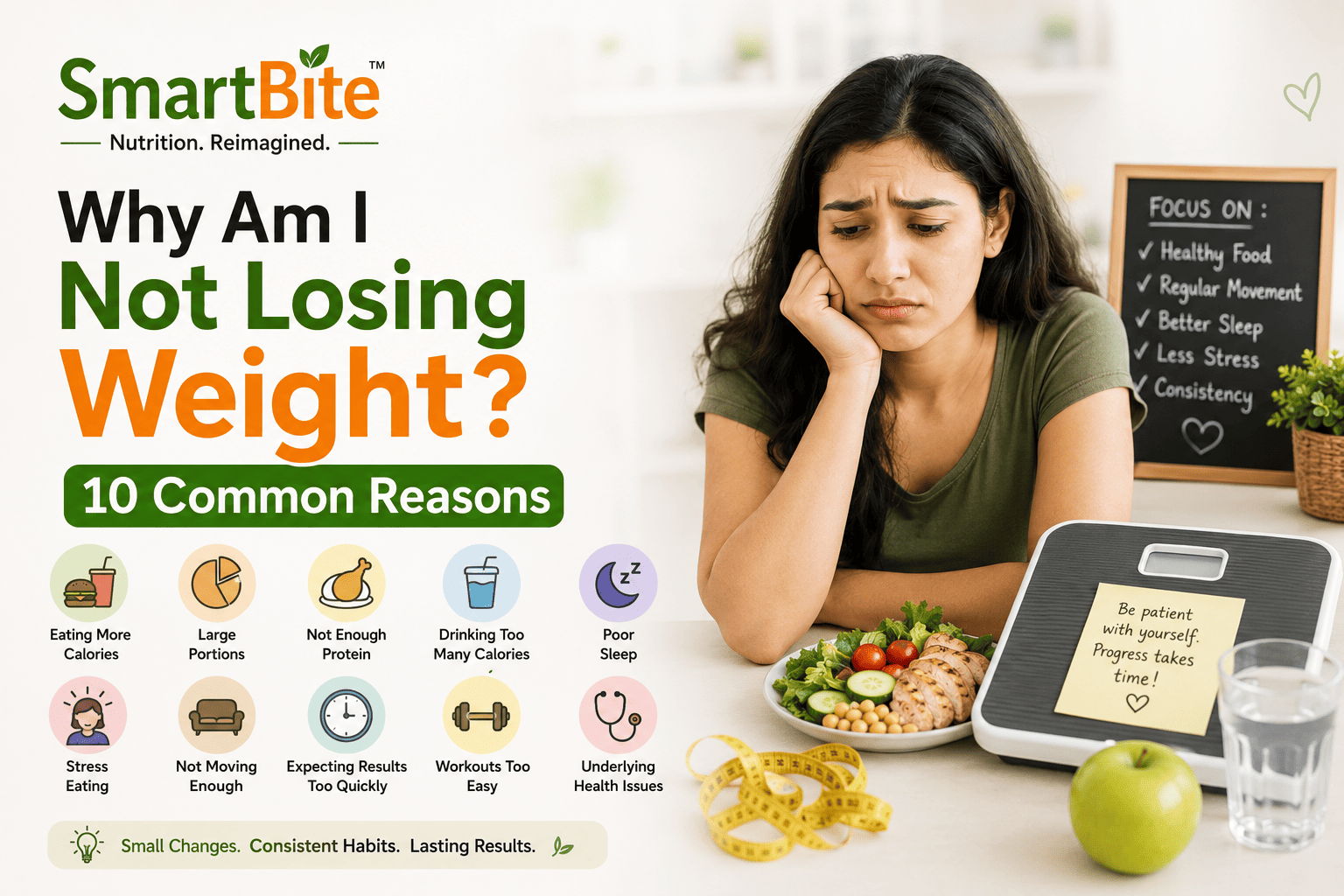
Trying to lose weight can be frustrating, especially when you are eating better, exercising regularly, and still not seeing the number on the scale go down. If you are wondering, “Why am I not losing weight?”, the answer may not be that you are doing everything wrong.
Weight loss depends on many factors, including food choices, portion sizes, activity, sleep, stress, hormones, and consistency. Sometimes small habits that seem harmless can slow your progress.
Why am I not losing weight?
Here are 10 common reasons you may not be losing weight and what you can do about them.
You Are Eating More Calories Than You Think
Even healthy foods contain calories. Nuts, oils, dressings, smoothies, sauces, and snacks can quickly increase your daily calorie intake.
You may eat nutritious meals but still consume more energy than your body needs.
What to do: Pay attention to portion sizes and keep a simple food diary for a few days. This can help you understand where extra calories may be coming from.
Your Portions Are Too Large
Healthy food is important, but portion size matters too. For example, whole grains, avocado, nuts, and peanut butter can be part of a healthy diet, but eating large amounts may make weight loss harder.
Try using smaller plates and building balanced meals with vegetables, lean protein, whole grains, and healthy fats.
You Are Not Eating Enough Protein
Protein can help you feel full for longer and supports muscle maintenance during weight loss. If your meals are mostly carbohydrates with very little protein, you may feel hungry again soon after eating.
Include protein-rich foods such as eggs, Greek yogurt, chicken, fish, beans, lentils, tofu, or cottage cheese in your meals.
You Drink Too Many Calories
Liquid calories are easy to overlook. Sugary coffee, soft drinks, fruit juices, milkshakes, and some smoothies can add a surprising amount of calories without making you feel very full.
A simple solution: Choose water, unsweetened tea, or other low-calorie drinks more often. If you enjoy coffee, reduce added sugar and high-calorie creamers.
You Are Not Getting Enough Sleep
Sleep plays an important role in healthy weight management. When you regularly sleep too little, you may feel more tired and find it harder to control hunger and cravings.
Aim for a consistent sleep routine and try to get around 7–9 hours of sleep each night if possible.
Stress Is Affecting Your Eating Habits
Long-term stress can make healthy eating more difficult. Some people respond to stress by eating more, especially foods high in sugar or fat.
Instead of relying on food for stress relief, try simple habits such as walking, deep breathing, meditation, stretching, or spending time doing something you enjoy.
You Are Not Moving Enough During the Day
Going to the gym for an hour does not necessarily mean you are active for the rest of the day. Sitting for long periods can reduce your overall daily movement.
Try adding more activity to your routine. Walk after meals, take the stairs, stand up regularly, or aim for more daily steps.
You Expect Results Too Quickly
Healthy weight loss usually takes time. Your weight can also change from day to day because of water retention, food intake, digestion, and other factors.
Instead of focusing only on the scale, look at other signs of progress, such as better energy, improved fitness, better-fitting clothes, and healthier eating habits.
Consistency is more important than quick results.
Your Workout Routine Has Become Too Easy
Your body adapts to repeated activities. If you have been doing the same workout for months without increasing the challenge, your progress may slow.
You can gradually increase your walking time, resistance, repetitions, or workout intensity. Strength training is also useful because maintaining muscle can support a healthy metabolism.
However, you do not need to exercise excessively to lose weight.
An Underlying Health Issue May Be Involved
Sometimes difficulty losing weight can be related to certain medications or health conditions. Hormonal conditions, thyroid problems, sleep disorders, and other health issues can affect weight management.
If you have been making consistent lifestyle changes but are struggling with unexplained weight gain or other symptoms, talk with a qualified healthcare professional. They can help identify whether an underlying issue needs attention.
How to Start Losing Weight Again
If your weight loss has stopped, avoid extreme diets or skipping meals. Instead, go back to the basics:
- Eat more vegetables and fiber-rich foods.
- Include protein in every main meal.
- Watch portion sizes.
- Reduce sugary drinks and highly processed snacks.
- Drink enough water.
- Stay physically active throughout the day.
- Get enough quality sleep.
- Manage stress.
- Track your habits rather than obsessing over the scale.
- Give your body enough time to respond.
Final Thoughts
If you are asking, “Why am I not losing weight?”, remember that weight loss program is not always a straight line. Small changes in your eating habits, activity level, sleep, and stress can make a meaningful difference over time.
The goal should not be a quick fix. A balanced diet and sustainable lifestyle are much more likely to help you maintain your results in the long run.
At SmartBite, the focus is on making nutrition simple, practical, and sustainable. Instead of following extreme diets, focus on healthy habits that you can continue for years.