
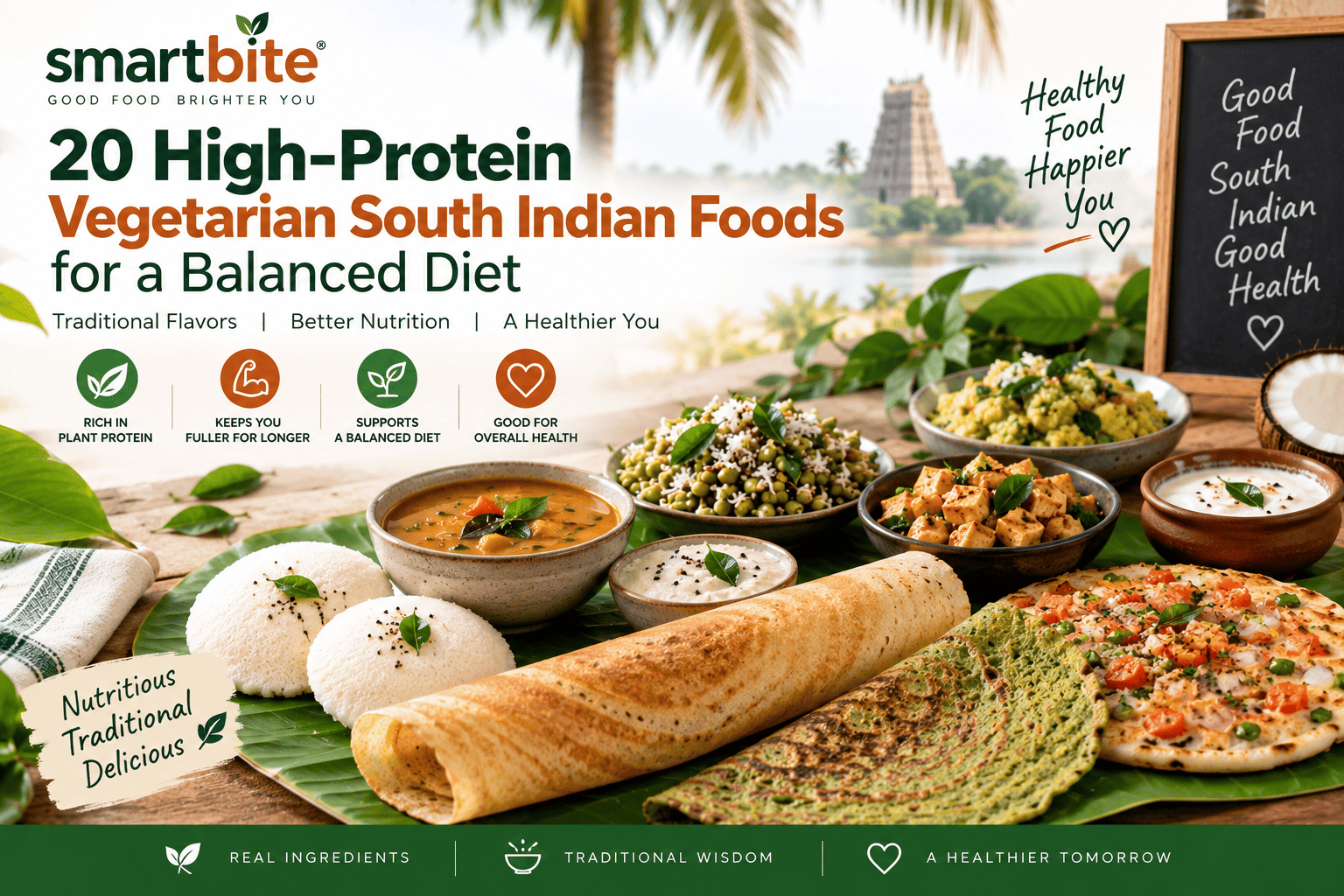
South Indian food is often associated with idli, dosa, rice and coconut-based dishes. While these foods can certainly be part of a healthy diet, a balanced South Indian meal should also include enough protein, vegetables, healthy fats and fiber.
For vegetarians, the good news is that South Indian cuisine offers plenty of natural protein sources. Lentils, dals, beans, sprouts, curd, paneer, soy and traditional fermented foods can make everyday meals more nutritious and satisfying.
Here are 20 high-protein vegetarian South Indian foods you can include in a balanced diet.
Sambar
Sambar is one of the easiest ways to add protein to a South Indian meal. It is prepared mainly with dal and vegetables, making it a combination of plant protein, fiber and micronutrients.
Enjoy it with idli, dosa, millet dishes or a moderate serving of rice.
Adai
Adai is a protein-rich South Indian pancake traditionally prepared using a mixture of dals and rice. Because it contains several types of lentils, it is generally more protein-focused than a plain dosa.
Add vegetables such as onions, carrots or spinach to make it even more nutritious.
Pesarattu
Pesarattu is an Andhra-style green gram dosa made primarily from whole or split moong dal. It is naturally rich in plant protein and can be a filling breakfast option.
Pair it with vegetable chutney or curd instead of relying heavily on coconut-based accompaniments.
Moong Dal Chilla
Although not exclusive to South India, moong dal chilla fits easily into an Indian vegetarian meal plan. Soaked moong dal is blended into a batter and cooked like a thin pancake.
Add grated vegetables, coriander and spices for extra flavor and nutrition.
Idli with Sambar
Idli itself is mainly made from rice and urad dal, while sambar provides an additional pulse-based protein source. Combining the two creates a more balanced traditional breakfast.
For extra fiber, consider adding vegetable-rich sambar and a side of vegetables.
Dosa with Sambar
A traditional dosa paired with sambar is another practical way to combine cereals and pulses. The fermentation involved in dosa batter also contributes to its traditional nutritional profile.
For a more balanced plate, choose vegetable fillings rather than making the meal entirely starch-based.
Vegetable Uttapam
Uttapam uses fermented dosa batter and is topped with vegetables such as onions, tomatoes, carrots and capsicum. Adding a generous serving of sambar increases the protein content of the meal.
It can be a satisfying breakfast or light dinner.
Sundal
Sundal is a popular South Indian snack made with cooked legumes such as chickpeas, black chickpeas, green peas or peanuts.
It is an excellent alternative to highly processed evening snacks and can be prepared with curry leaves, mustard seeds, coconut and spices.
Chickpea Sundal
Chickpeas are a useful vegetarian source of protein and fiber. A bowl of chickpea sundal makes a simple snack or side dish.
You can add grated carrot, cucumber, coriander and lemon to make it more refreshing.
Green Gram Sundal
Green gram sundal provides plant protein along with fiber. It can be especially useful when you want a light snack that keeps you satisfied between meals.
Try adding chopped vegetables and lemon rather than excessive coconut.
Black Chickpea Sundal
Black chickpeas, also called kala chana, are another nutritious pulse that works well in South Indian cooking.
Black chickpea sundal can be served as an evening snack or included alongside a vegetable-based lunch.
Sprouted Green Gram Salad
Sprouted moong can be combined with cucumber, tomato, coriander, lemon and spices to create a refreshing high-protein vegetarian snack.
Sprouts can also be added to breakfast bowls, salads or chaat-style dishes.
Dal Rasam
Rasam is generally lighter than sambar, but versions prepared with dal can contribute some protein to a meal. Pair it with vegetables and a protein-rich side dish for better overall balance.
Avoid making rice and rasam the entire meal if your goal is to increase protein intake.
Avial with Curd
Avial is a vegetable-rich Kerala dish traditionally prepared with mixed vegetables, coconut and yogurt/curd. While it is not a very high-protein dish by itself, the addition of curd makes it more nutritionally balanced.
Serve it alongside dal, beans or another protein-rich food.
Curd Rice with a Protein-Rich Side
Curd provides protein and calcium, while rice supplies carbohydrates. To make curd rice more balanced, serve it with a side of sundal, sprouts or vegetable-based dal.
This is particularly useful when you want a lighter meal without completely removing carbohydrates.
Vegetable Kootu
Kootu combines vegetables with dal and is a nutritious addition to a South Indian lunch. The combination of pulses and vegetables provides protein, fiber and a variety of micronutrients.
It works well with a moderate serving of rice or millet.
Keerai Kootu
Keerai kootu combines leafy greens with dal and spices. It is a simple way to add both vegetables and plant protein to a traditional meal.
Use different seasonal greens to keep your meals varied.
Paneer Vegetable Curry
Paneer is a vegetarian protein source that can be included occasionally in South Indian-style meals. Cook it with vegetables and mild spices rather than using a heavy cream-based preparation.
Paneer can also be added to dosa fillings, wraps or vegetable bowls.
Tofu South Indian Stir-Fry
Tofu can be combined with vegetables, curry leaves, mustard seeds and South Indian spices for a quick protein-rich dish.
It can be served with millet, dosa or a small portion of rice for a balanced meal.
Soy Chunk Vegetable Curry
Soy chunks are a concentrated vegetarian protein option and can be prepared with tomatoes, onions, vegetables and traditional South Indian spices.
They can be added to curries, pulao-style dishes or vegetable preparations when you want to increase the protein content of a meal.
How to Build a High-Protein South Indian Meal
You don’t need to completely change your traditional diet to eat more protein. Instead, focus on combining different food groups.
A simple plate could include:
- Protein: dal, sambar, beans, sprouts, curd, paneer, tofu or soy
- Vegetables: leafy greens and seasonal vegetables
- Carbohydrates: rice, dosa, idli, millet or other whole grains
- Healthy fats: nuts, seeds or moderate amounts of cooking oils
- Fiber: vegetables, pulses, salads and whole grains
ICMR-NIN’s dietary guidance emphasizes that a balanced vegetarian diet can provide the required amino acids, and combinations of cereals and pulses can improve protein quality.
Simple Ways to Increase Protein in Your Daily Diet
If your usual meals are mostly rice, dosa or idli, try making small changes:
Add dal: Include sambar, dal or kootu with your main meal.
Choose protein-rich snacks: Replace biscuits or fried snacks with sundal, roasted legumes, sprouts or curd.
Add vegetables to breakfast: Vegetable uttapam, adai or pesarattu can make breakfast more filling.
Include curd: Add plain curd to lunch or dinner when it suits your dietary needs.
Rotate protein sources: Don’t depend on just one food. Rotate dals, beans, sprouts, dairy, soy and other vegetarian sources.
Combine foods: Pairing cereals with pulses is a traditional and useful approach to improving the overall quality of vegetarian protein
Final Thoughts
Eating a high-protein vegetarian diet doesn’t mean giving up your favorite South Indian foods. Traditional dishes such as sambar, adai, pesarattu, sundal, kootu, idli and dosa can all fit into a balanced eating pattern when paired thoughtfully.