
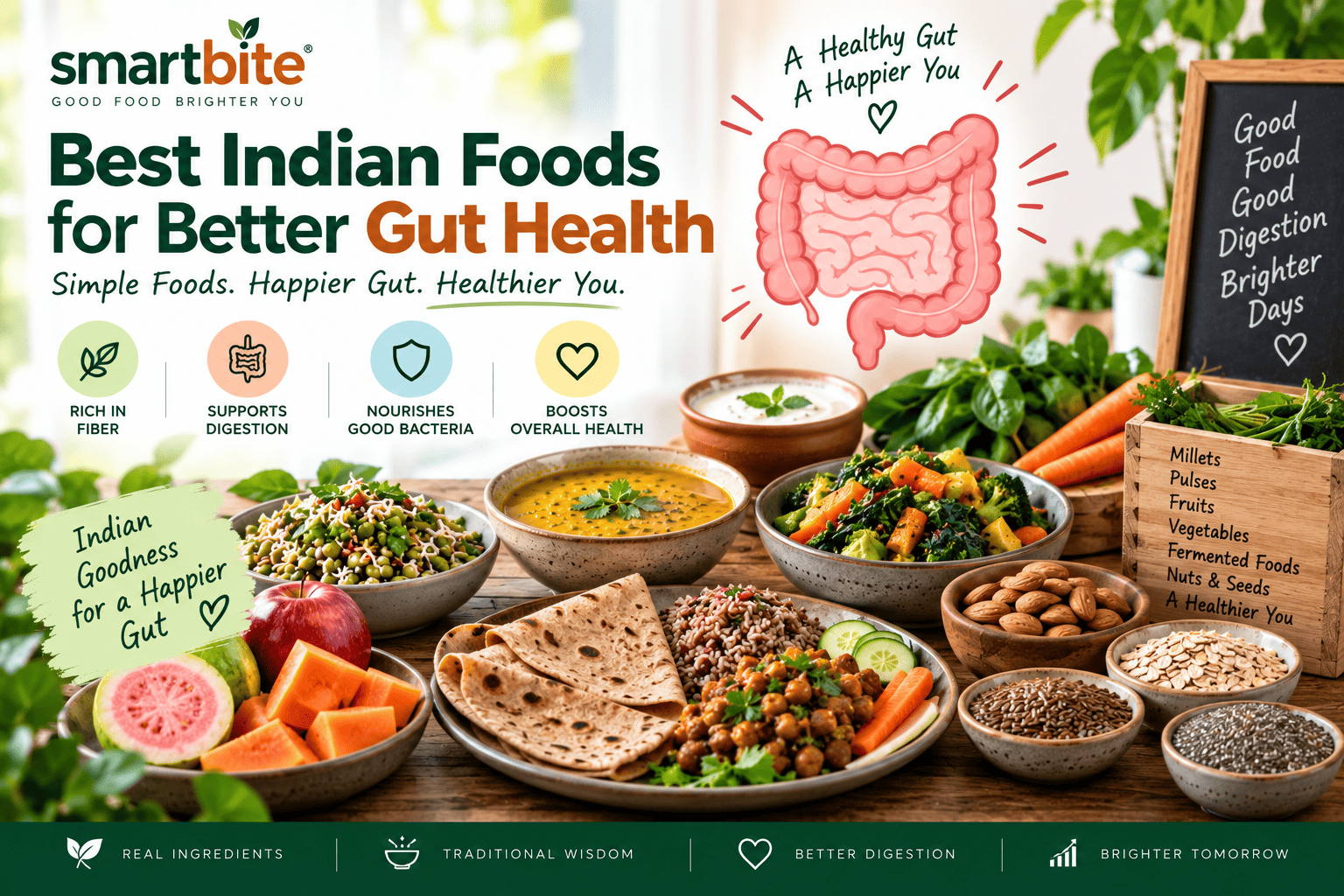
Your gut plays an important role in digestion, nutrient absorption and overall health. The good news is that supporting your gut does not require expensive supplements or complicated diets. Many everyday Indian foods can provide the fiber, nutrients and variety your digestive system needs.
From vegetables and fruits to dal, whole grains, curd and traditional fermented foods, Indian cuisine offers plenty of options for building a gut-friendly diet.
Here are some of the best Indian foods for better gut health, with practical suggestions from a dietitian’s perspective.
- Dal and Lentils
Dal is a staple in Indian households and an excellent source of plant protein and dietary fiber. Moong dal, masoor dal, toor dal and other pulses can be included regularly as part of a balanced diet.
If you are not accustomed to eating much fiber, increase your intake gradually to reduce the chance of gas or bloating.
- Curd
Plain curd is a simple addition to an Indian meal. It provides protein and calcium and is a naturally fermented dairy food.
Choose plain, unsweetened curd rather than flavored varieties with added sugar. You can enjoy it with lunch, add it to a vegetable bowl or use it to prepare raita.
- Vegetables
A diet rich in vegetables is one of the simplest ways to increase fiber and improve overall diet quality.
Include a variety of vegetables such as:
- Carrots
- Spinach and other leafy greens
- Beans
- Bhindi
- Pumpkin
- Cabbage
- Cauliflower
- Broccoli
- Tomatoes
- Cucumber
- Beetroot
ICMR-NIN recommends eating a variety of fresh, locally available and preferably seasonal vegetables and fruits. Its dietary guidelines also highlight dietary fiber as important for proper bowel function.
- Guava
Guava is a particularly useful fruit to include when you want more fiber in your diet. Enjoy it whole rather than as juice.
You can have guava as a mid-morning snack or add chopped pieces to a fruit bowl.
- Papaya
Papaya is a popular Indian fruit and can be a refreshing addition to breakfast or a snack.
Rather than depending on papaya alone for digestive health, include it as part of an overall diet containing fruits, vegetables, whole grains and pulses.
- Apples and Pears
Apples and pears can provide fiber when eaten whole, especially when the edible skin is consumed after proper washing.
They make convenient alternatives to packaged snacks and can be paired with a small serving of nuts for a more satisfying snack.
- Oats
Oats are an easy source of fiber and can be used in both traditional and modern Indian meals.
Try vegetable oats upma, overnight oats with curd and fruit, or a simple bowl of oats topped with nuts and seeds.
- Millets
Millets such as ragi, jowar, bajra and foxtail millet can add variety to your grain intake.
Use them in rotis, dosa, idli, porridge or other preparations. The goal is not to completely eliminate rice or wheat, but to create more variety in your diet.
- Whole-Wheat Roti
Whole-wheat atta contains more fiber than refined flour. A balanced meal of whole-wheat roti, dal, vegetables and curd can provide a useful combination of fiber, protein and other nutrients.
Choose minimally processed whole-grain foods more often where they suit your individual dietary needs.
- Chickpeas and Rajma
Chickpeas, kala chana and rajma are nutritious sources of plant protein and fiber.
They can be included in curries, salads, chaat or traditional preparations. If legumes cause bloating, start with smaller portions and increase gradually.
- Sprouts
Sprouted moong and other sprouts can be added to salads, breakfast dishes and snacks.
Try a simple sprouts chaat with cucumber, tomato, coriander and lemon. Make sure sprouts are handled and prepared safely, particularly for young children, older adults and people with weakened immunity.
- Flaxseeds
Flaxseeds provide fiber and healthy fats. Ground flaxseed can be added to oats, curd, smoothies or homemade foods.
Start with a small amount and ensure adequate fluid intake when increasing dietary fiber.
- Chia Seeds
Chia seeds are another convenient way to add fiber to your diet. They can be mixed into curd, oats or a homemade smoothie.
They should complement—not replace—a diet based on vegetables, fruits, pulses and whole grains.
- Traditional Fermented Foods
Indian cuisine includes several fermented foods, including idli, dosa, dhokla and certain traditional batters.
These foods can add variety to the diet. However, fermentation does not automatically make every food a “probiotic food,” so it is better to focus on overall dietary variety rather than relying on one fermented best food for gut health.
- Nuts and Seeds
Almonds, walnuts, peanuts, pumpkin seeds and sunflower seeds can contribute fiber, healthy fats and other nutrients.
Keep portions moderate because nuts and seeds are energy-dense. A small handful can make a nutritious snack.
How to Build a Gut-Friendly Indian Plate
A healthy gut diet is about the overall pattern, not one magic food.
A simple meal could include:
½ plate: vegetables and salad
¼ plate: protein such as dal, beans, curd, paneer or another suitable source
¼ plate: rice, roti, millet or another whole-grain carbohydrate
Add fruit during the day and choose water as your main beverage.
ICMR-NIN’s dietary guidance recommends at least 400 g of vegetables and 100 g of fresh fruits daily for adults, while emphasizing variety and different colors of produce. Individual needs can vary depending on age, health and dietary requirements.
Foods to Limit for Better Gut Health
You don’t need to completely eliminate your favorite foods. However, try not to make highly processed foods the foundation of your diet.
Limit frequent consumption of:
- Highly processed packaged snacks
- Excessively fried foods
- Sugary beverages
- Foods high in added sugar
- Refined-grain-heavy meals with little fiber
- Very large portions of processed or fast foods
Instead, gradually replace some of these foods with fruits, vegetables, pulses, whole grains, nuts and seeds.
Don’t Forget Water and Movement
Fiber works best as part of a diet with adequate fluid intake. If you suddenly increase fiber without drinking enough fluids, you may experience bloating or discomfort.
Regular physical activity is also an important part of a healthy lifestyle. Walking, cycling, yoga or another activity you enjoy can complement a nutritious diet.
Final Thoughts
The best Indian foods for gut health are not exotic or difficult to find. Everyday foods such as dal, vegetables, fruits, curd, whole grains, millets, chickpeas, sprouts, nuts and seeds can form the foundation of a gut-friendly eating pattern. At Smartbite dietitian , we believe better health starts with simple food choices that you can enjoy and maintain every day.
The key is variety, balance and consistency. Instead of searching for one “superfood,” aim to eat different plant foods throughout the week and gradually increase fiber if your current diet is low in it.If you have persistent bloating, abdominal pain, constipation, diarrhea, unexplained weight loss or other ongoing digestive symptoms, consult a doctor or qualified dietitian rather than trying to manage the problem through diet alone.