
If you work in Electronic City, eating well is less about willpower and more about planning around your day: long commutes on Hosur Road, desk lunches, canteen meals, late meetings and shift work. The simplest fix is a routine you can repeat. Eat a protein-rich breakfast before you leave, build a balanced lunch plate, carry two planned snacks, and keep dinner lighter and earlier. Below is a practical guide from Dt. Nazish Akhtar, Dietitian & Nutritionist at SmartBite, whose clinic in Akshayanagar is a short drive from Electronic City.
Why is it hard to eat well when you work in Electronic City?
Most people we see from Electronic City Phase 1 and Phase 2 describe the same pattern:
- Long commutes: leaving early and getting home late means breakfast is skipped and dinner is heavy.
- Desk and canteen lunches: large portions of rice or biryani, fried sides and very few vegetables.
- Tea, coffee and biscuits: several cups a day, often in place of a real snack.
- Late meetings and shift work: irregular meal times, late-night ordering and poor sleep.
- Long hours sitting: very little movement between the cab, the desk and the sofa.
Over months, this often shows up as weight gain, acidity, bloating, low energy in the afternoon, and for some, changes in blood sugar, cholesterol or cycles.
What should a working day of eating look like?
This is a general example, not a prescription. Your own plan should match your health, reports and routine.
- Before you leave (7–8 am): a protein-rich breakfast such as moong dal chilla, vegetable besan cheela, paneer or egg bhurji with a roti, or idli with sambar.
- Mid-morning (11 am): a fruit or a handful of nuts, instead of tea with biscuits.
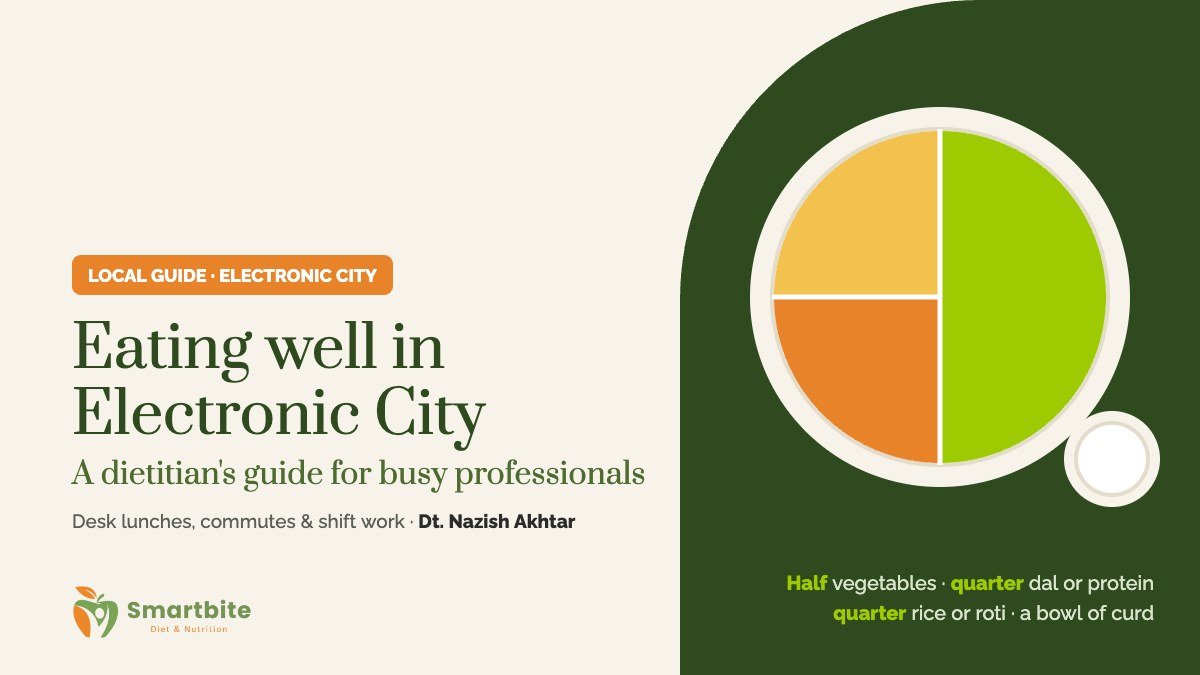
- Lunch (1–2 pm): half the plate vegetables, a quarter dal, paneer, egg, chicken or fish, and a quarter rice or two phulkas, with curd or buttermilk.
- Evening (4–5 pm): roasted chana, sprouts chaat, a boiled egg or buttermilk, so you don’t arrive home starving.
- Dinner (by 8–9 pm): a lighter meal such as dal with vegetables and one or two phulkas, or vegetable khichdi, finished two to three hours before bed.
How do you choose a better canteen or office lunch?
You don’t need special food. Small changes to the same canteen plate make a big difference:
- Start with vegetables: take the sabzi, salad or kosambari first and fill half the plate.
- Add a protein: dal, rajma, chana, paneer, egg, chicken or fish at every lunch.
- Watch the rice portion: about one katori of cooked rice, or two phulkas, is enough for most desk-based days.
- Keep fried sides occasional: pick one, such as papad or a small portion of fry, not all of them.
- Choose curd or buttermilk over sweetened drinks.
Rice is not the enemy. In the right portion, with dal and vegetables, it fits into a weight-loss plan.
What are good desk snacks?
- Roasted chana or makhana
- A handful of almonds, walnuts or peanuts
- A fruit such as an apple, guava, orange or papaya
- Sprouts chaat or a boiled egg
- Buttermilk or plain curd
Keep two of these in your bag or drawer. Planned snacks are what stop the 4 pm biscuit packet and the late-night food order.
How can you eat well on night or rotational shifts?
- Eat a proper meal before the shift starts, not just tea.
- Have one planned meal mid-shift, such as a roti roll with paneer or egg and vegetables, instead of grazing on packaged snacks.
- Keep caffeine to the first half of the shift so you can sleep afterwards.
- After the shift, have a light meal and then sleep in a dark, quiet room.
Shift work makes hunger, sleep and weight harder to manage, so this is where a personalised plan helps most.
Does the commute affect your weight?
It can. Long commutes take time from sleep, cooking and movement. Three habits help:
- Prepare breakfast or lunch the night before, at least on weekdays.
- Carry water and a snack, so you’re not hungry and tired by the time you reach home.
- Add movement in small pieces: a 10-minute walk after lunch, taking the stairs, or standing for calls.
Who should see a dietitian?
A personalised plan is worth it if you are gaining weight despite trying, have PCOS / PCOD / PMOS, thyroid, prediabetes or high cholesterol, deal with frequent acidity or bloating, or work shifts. Please see your doctor first if you have unexplained weight loss, severe tiredness or any new symptoms.
A dietitian near Electronic City
SmartBite’s clinic is in Akshayanagar, Bangalore, a short drive from Electronic City. Dt. Nazish Akhtar, Dietitian & Nutritionist (M.Sc. Dietetics & Nutrition, 12+ years’ experience), builds plans around Indian home food and your work routine, with regular follow-ups. If your schedule is tight, you can also consult online.
Explore our weight loss programme, our PCOS / PCOD / PMOS diet programme, our gut health programme, or see our dietitian services for Electronic City, including Phase 1 and Phase 2. To book, call +91 88617 28316.
Also read: Bloating after eating? 9 causes and what to eat.
Check where you stand: use our BMI calculator for Indians to see your BMI with Asian cut-offs, your waist-to-height ratio and your daily calorie needs.
Frequently asked questions
What is a healthy lunch for office workers in Electronic City?
A balanced plate: half vegetables, a quarter dal or another protein such as paneer, egg, chicken or fish, and a quarter rice or two phulkas, with curd or buttermilk. Most canteens already serve these; the change is in the portions.
Can I lose weight if I eat canteen food every day?
Yes, for many people. Choosing vegetables first, adding protein, keeping rice to about one katori and limiting fried sides usually helps. A dietitian can adjust this to your health and goals.
What should I eat on a night shift?
Eat a proper meal before the shift, one planned meal in the middle instead of packaged snacks, limit caffeine to the first half, and have a light meal before you sleep.
Is there a dietitian near Electronic City?
SmartBite’s clinic in Akshayanagar is a short drive from Electronic City. Dt. Nazish Akhtar, Dietitian & Nutritionist, also consults online. Call +91 88617 28316 to book.
Do I have to give up rice to lose weight?
No. Total intake and portions over the day matter more than any single food. Rice can be part of a weight-loss plan in the right portion, paired with dal and vegetables.
