
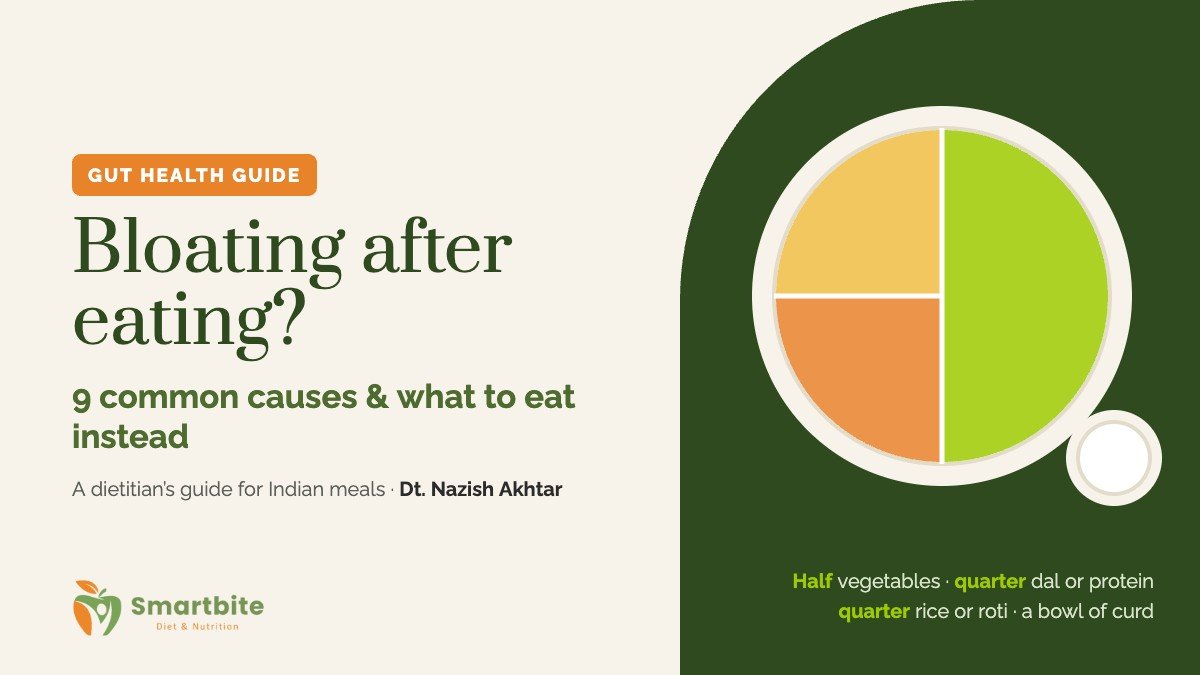
Feeling full and tight after lunch, burping through the afternoon, or loosening your waistband by evening? Bloating after eating is one of the most common complaints I hear in clinic, often from people who came in for weight loss, PCOS / PCOD / PMOS or thyroid support.
The good news: most everyday bloating is linked to how and when we eat, not just what we eat. Below are the nine causes I see most often in Indian homes and offices, and what to try for each, without giving up the home food you enjoy.
Important: if you have blood in your stool, black stools, unexplained weight loss, persistent vomiting, difficulty swallowing or severe abdominal pain, please see a doctor first. This guide is for everyday bloating, not a replacement for medical care.
Why does my stomach bloat after eating?
Bloating is the feeling of fullness or pressure in the abdomen, sometimes with visible swelling. It usually comes from gas produced when gut bacteria break down certain foods, air swallowed while eating, slow digestion of a heavy meal, or sensitivity to particular foods. Constipation and acidity often go hand in hand with it.
9 common causes of bloating after eating, and what to try
1. Long gaps, then one heavy meal
Skipping breakfast, having a quick bite at lunch and then a large dinner overloads digestion in one go.
Try this: eat at regular times, roughly every 3–4 hours, with smaller balanced portions. Keep dinner lighter and finish it 2–3 hours before bed.
2. Tea or coffee on an empty stomach
For many people, the first cup of chai or coffee before any food is what sets off acidity and discomfort for the rest of the day.
Try this: have something small first, such as soaked almonds, a fruit or your breakfast, then your tea. Keeping to about two cups a day also helps many people.
3. Eating fast, or in front of a screen
Rushed meals at the desk or while scrolling mean less chewing, more swallowed air and eating past fullness.
Try this: give each meal 15–20 minutes, chew well and put the phone away. Stop when you feel comfortably full, not stuffed.
4. Adding fibre too fast
Fibre is good for the gut, but switching overnight to salads, oats, sprouts and millets often causes more gas, not less.
Try this: increase vegetables, dals, whole grains and millets gradually over two to three weeks, and drink more water as you do.
5. Not drinking enough water
Too little fluid slows digestion and makes constipation, and the bloating that comes with it, more likely, especially in air-conditioned offices where you don’t feel thirsty.
Try this: sip water through the day rather than large amounts at once. Buttermilk, clear soups and coconut water also count towards your fluids.
6. Fizzy drinks, chewing gum and “sugar-free” sweets
Carbonated drinks add gas directly, gum makes you swallow air, and sweeteners such as sorbitol in sugar-free products can cause gas in many people.
Try this: swap fizzy drinks for plain water, nimbu pani without soda, or jeera water, and notice whether sugar-free products bother you.
7. Milk that doesn’t suit you
Some adults digest lactose, the natural sugar in milk, less well. Several glasses of milk or milky chai a day can then mean gas and loose stools.
Try this: curd, buttermilk and paneer are often better tolerated than plain milk. If you suspect milk is a trigger, cut back for a week or two and see how you feel, ideally with a dietitian’s guidance so you still get enough calcium and protein.
8. Heavy, oily or late dinners
Fried snacks, rich gravies and late dinners, followed by lying down soon after, are a common recipe for bloating and acidity at night.
Try this: keep oily and fried foods occasional, choose lighter cooking such as steaming, sautéing and tadka with less oil, and take a short walk after dinner.
9. Cutting foods out by guesswork
Rajma, chole, cabbage, onion and garlic can cause gas for some people, but cutting out milk, wheat or whole food groups without knowing your real triggers often makes meals harder without helping much.
Try this: soak and pressure-cook beans and dals well, and keep a simple food and symptom note for one to two weeks. A dietitian can help you spot patterns and keep everything that suits you.
A gut-friendly Indian day: an example
This is a general example, not a prescription. Your own plan should suit your health, preferences and routine.
- Early morning: a glass of warm water, then soaked almonds or a fruit
- Breakfast: vegetable poha or idli with sambar, or a moong dal chilla with curd
- Mid-morning: a fruit such as papaya or banana, or a glass of buttermilk
- Lunch: rice or two phulkas, dal, a cooked vegetable and a small bowl of curd
- Evening: tea after a small snack, such as roasted chana or a handful of nuts
- Dinner (2–3 hours before bed): a lighter meal, such as khichdi with vegetables, or a phulka with dal and a cooked vegetable
Foods that often help, and common triggers
Often easier on the gut: well-cooked vegetables, moong dal, curd and buttermilk, rice and phulkas, papaya and banana, and seasonings traditionally used in Indian cooking such as jeera, ajwain and a pinch of hing.
Common triggers for some people: fizzy drinks, very spicy or oily food, large amounts of raw salad if you are not used to it, under-cooked beans, too much milk, and sugar-free sweets. Triggers differ from person to person, which is why a personalised approach works better than a fixed list. You can read more in our guide to the best Indian foods for better gut health.
When to see a doctor
Please see a doctor before changing your diet if bloating comes with any of these:
- Blood in your stool or black stools
- Weight loss you can’t explain
- Severe, constant or worsening abdominal pain
- Persistent vomiting or difficulty swallowing
- A lasting change in bowel habits, especially after the age of 40
Conditions such as IBS should be diagnosed by a doctor. Nutrition then works alongside the treatment they recommend.
How a dietitian can help with bloating, acidity and IBS
A dietitian looks at your symptoms, food habits, reports, medicines and daily routine together, then builds a plan around the Indian home food you already eat. That usually means regular meal timings, the right portions, fibre and fluids increased step by step, and finding your own trigger foods rather than avoiding everything.
At SmartBite, Dt. Nazish Akhtar, Dietitian & Nutritionist (M.Sc. Dietetics & Nutrition, 12+ years’ experience), runs a dedicated gut health diet programme for bloating, acidity, IBS and constipation, with weekly follow-ups. Gut problems often overlap with PCOS / PCOD / PMOS and weight loss goals, and your plan can cover both. Consultations are available at our Akshayanagar clinic in Bangalore and online across India.
Frequently asked questions
Is it normal to feel bloated after every meal?
Occasional bloating after a large or heavy meal is common. Feeling bloated after almost every meal is worth looking into, usually starting with meal timing, portion size, eating speed and specific trigger foods. If it comes with warning signs such as blood in stool or weight loss, see a doctor.
Which Indian foods cause the most gas?
Rajma, chole, whole urad, cabbage, cauliflower, onion and very spicy or fried foods cause gas for many people, but not for everyone. Soaking and pressure-cooking beans well and using jeera, ajwain or hing in cooking often helps.
Does drinking water after meals cause bloating?
Sipping water with or after meals is fine for most people. Drinking a very large amount at once can make you feel full and uncomfortable, so spread your water through the day.
Is curd good for bloating?
Curd and buttermilk suit many people and can be part of a gut-friendly plan. Some people with milk sensitivity tolerate curd better than plain milk. If curd seems to bother you, note it and discuss it with your dietitian.
How long does it take for bloating to improve with diet changes?
Many people notice less bloating within a few weeks of regular meal times, slower eating and gradual changes to fibre and fluids. How quickly it improves depends on the cause, other health conditions and how consistently the changes are followed.
