
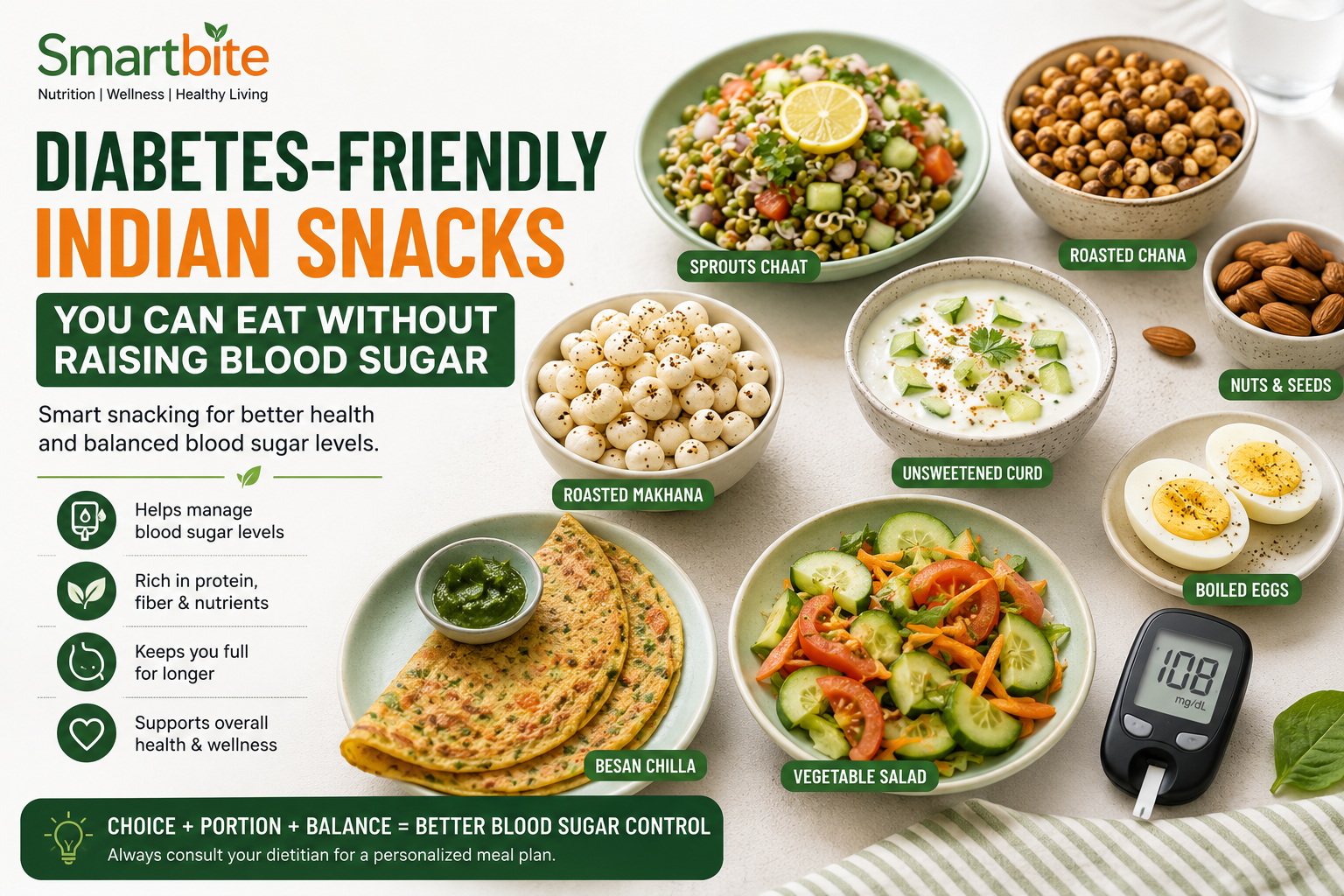
Managing diabetes does not mean you have to stop enjoying snacks. The key is choosing foods that provide protein, fibre, healthy fats, and controlled portions instead of snacks high in refined carbohydrates and added sugar.
For many Indians, snacks such as biscuits, namkeen, sweets, fried foods, and sugary drinks are common between meals. Eating these regularly may make blood sugar management more difficult. Choosing healthier Indian snack options can help you enjoy food while supporting a balanced diet.
Diabetes-Friendly Indian Snacks
1. Roasted Chana
Roasted chana is a simple and convenient snack option. It provides protein and fibre and can be more filling than many processed snacks.
Keep the portion moderate and choose plain roasted chana instead of versions with added sugar or excessive salt.
2. Sprouts Chaat
Sprouts can be combined with cucumber, tomato, onion, coriander, lemon juice, and a small amount of spices to make a nutritious chaat.
The combination of fibre and plant-based protein can make sprouts chaat a satisfying snack between meals.
3. Boiled Eggs
For people who eat eggs, boiled eggs can be a convenient protein-rich snack. They contain very little carbohydrate and can help make you feel full.
Pairing an egg with vegetables such as cucumber or tomato can make the snack more balanced.
4.Roasted Makhana
Makhana, also known as fox nuts, can be roasted with a small amount of oil and mild spices.
Avoid heavily buttered or sugar-coated versions. Portion control is still important because even healthier foods can contribute calories when eaten in large quantities.
5. Vegetable Salad
A simple salad made with cucumber, tomato, carrot, capsicum, and other suitable vegetables can be a refreshing snack.
Adding a source of protein, such as sprouts, paneer, or roasted chana, can make it more satisfying.
6. Unsweetened Curd
Plain, unsweetened curd can provide protein and calcium. You can combine it with cucumber and spices to make a simple savoury snack.
Avoid flavoured or sweetened curd products that may contain added sugar.
7. Nuts and Seeds
Almonds, walnuts, pumpkin seeds, and other nuts and seeds can be useful snack choices because they provide healthy fats, protein, and fibre.
However, nuts are calorie-dense, so a small portion is generally enough.
8. Paneer with Vegetables
A small portion of paneer combined with cucumber, tomato, or other vegetables can provide protein and make a filling snack.
Choose a portion suitable for your individual nutritional requirements, especially if you are also managing your overall calorie or fat intake.
9. Besan Chilla
A small besan chilla prepared with vegetables can be a better alternative to refined-flour snacks. Besan provides protein and fibre and can be combined with vegetables for additional nutrition.
Avoid making it excessively oily, and keep the portion appropriate for your meal plan.
10. Homemade Vegetable Soup
A homemade vegetable soup can be a comforting snack, particularly in the evening. Use a variety of non-starchy vegetables and avoid adding excessive cream, butter, or refined ingredients.
For additional protein, suitable ingredients such as beans or lentils can be included depending on your individual diet.
Snacks to Limit When Managing Diabetes
Some popular snacks can cause a faster rise in blood glucose, particularly when eaten in large portions. These may include:
- Sugary biscuits and cookies
- Sweets and desserts
- Sweetened beverages
- Packaged fruit juices
- Fried namkeen
- Chips
- Cakes and pastries
- Sugar-coated snacks
- Large portions of refined-flour foods
You do not necessarily have to completely eliminate every food from your diet. Portion size, frequency, overall meal composition, and your individual health needs are important.
How to Make Your Snacks More Diabetes-Friendly
A few simple habits can make snack choices easier:
Choose protein: Include foods such as eggs, curd, paneer, sprouts, pulses, or nuts where appropriate.
Add fibre: Vegetables, legumes, seeds, and other fibre-rich foods can make snacks more filling.
Watch portions: Even healthy foods can affect your overall calorie intake when portions are too large.
Avoid added sugar: Choose unsweetened versions of foods and drinks whenever possible.
Plan ahead: Keeping healthier snacks available can reduce the temptation to choose packaged foods when hunger strikes.
Why Individual Nutrition Guidance Matters
Diabetes affects people differently. Your ideal snack choices and portion sizes can depend on factors such as your blood glucose levels, medication, activity level, body weight, eating pattern, and other health conditions.
A diabetes dietitian can help you understand how different foods fit into your overall meal plan and create practical eating habits based on your lifestyle.
Smartbite for Personalised Diabetes Nutrition
Smartbite Dietitian in Bangalore focuses on personalised nutrition and practical dietary guidance. A structured nutrition plan can help people with diabetes make better food choices while still enjoying familiar Indian foods.
Instead of following a generic diet from the internet, personalised guidance can help you understand suitable portions, meal timing, food combinations, and snack choices based on your individual needs.
Final Thoughts
Having diabetes does not mean giving up snacks completely. Choosing options such as roasted chana, sprouts chaat, boiled eggs, roasted makhana, unsweetened curd, nuts, vegetables, and other balanced foods can be part of a diabetes-friendly eating pattern.
The goal is not to find a snack that never affects blood sugar. Rather, it is to choose nutritious foods, manage portions, and understand how your body responds to different meals.
If you have diabetes, work with your doctor or qualified dietitian to create a nutrition plan that suits your individual health needs and treatment.