
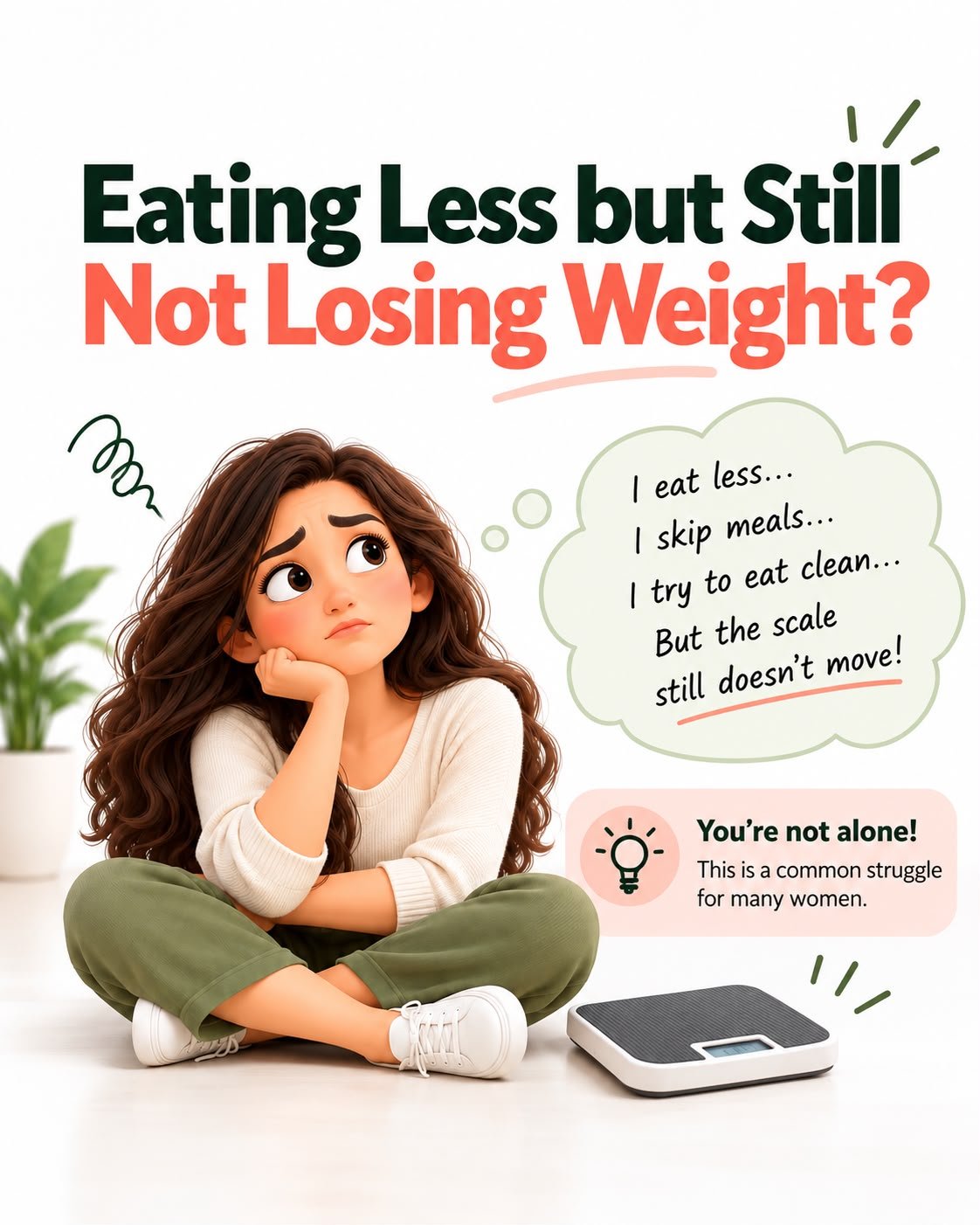
Eating Less but Still Not Losing Weight With PCOS? Here’s Why
Eating Less but Still Not Losing Weight With PCOS? Here’s Why is a common question among women who are making genuine efforts to improve their diet but are not seeing the expected change on the weighing scale.
You may have reduced portions, stopped certain foods, exercised more, and still feel that your weight is barely moving. This can be frustrating and can sometimes lead to even stricter dieting.
But PCOS is more complicated than simply “eat less and lose weight.” Polycystic ovary syndrome (PCOS) is associated with hormonal and metabolic changes, and weight management can be influenced by insulin resistance, sleep, stress, activity, medications, genetics, and other health factors. The 2023 international PCOS guideline recommends individualized lifestyle management rather than one universal diet or weight-loss method.
This article explains why weight loss may feel difficult with PCOS and what a more sustainable approach can look like.
Eating Less but Still Not Losing Weight With PCOS? Here’s Why
The first thing to understand is that eating less does not always mean you are following the right nutritional strategy for your individual needs.
Weight is influenced by multiple factors, including food intake, physical activity, sleep, medications, health conditions, genetics, and long-term lifestyle patterns.
With PCOS, additional metabolic and hormonal factors can make the process more challenging.
That does not mean weight loss is impossible.
It means the approach may need to be more personalized.
1. Insulin Resistance Can Be a Factor
Insulin resistance is an important feature of PCOS. When cells respond less effectively to insulin, the body may compensate by producing more insulin. PCOS is also associated with increased risk of impaired glucose regulation and type 2 diabetes.
However, it is important not to oversimplify this.
Not every woman with PCOS has the same degree of insulin resistance, and insulin resistance is not the only reason someone may struggle with weight.
Rather than eliminating carbohydrates completely, focus on balanced meals containing:
- Protein
- Vegetables
- Fiber-rich carbohydrates
- Healthy fats
- Appropriate portions
Your nutritional needs should be individualized according to your health, activity level, preferences, and goals.
2. “Eating Less” May Not Mean Eating Better
Reducing the amount of food you eat can sometimes make meals nutritionally inadequate without addressing the underlying problem.
For example, someone may eat very small meals but consume foods that provide little protein or fiber. They may then experience hunger later and find it difficult to maintain the routine.
A more sustainable approach is to improve meal quality and balance, not simply make every portion smaller.
A balanced plate could include:
Protein + vegetables + high-fiber carbohydrate + healthy fat
For example, a meal might combine dal or paneer with vegetables and an appropriate portion of whole grains or another high-fiber carbohydrate.
3. You May Be Underestimating Portions Without Realizing It
Even nutritious foods contain energy.
Foods such as nuts, seeds, nut butters, oils, smoothies, dried fruits, and large portions of healthy grains can contribute significant calories.
This doesn’t mean these foods are unhealthy.
It means that portion awareness still matters.
If you have been eating healthier but your weight has remained unchanged for an extended period, reviewing your actual portions, beverages, snacks, cooking oils, weekend eating, and meal frequency may reveal opportunities for adjustment.
A qualified nutrition professional can help you identify these patterns without resorting to extreme restriction.
4. Your Weight May Not Reflect Every Positive Change
The weighing scale is only one measure.
You may experience improvements in:
- Waist circumference
- Strength
- Fitness
- Energy
- Food consistency
- Physical activity
- Sleep
- Blood glucose or other metabolic markers
without seeing dramatic changes in body weight.
The international PCOS guideline specifically recognizes improvements in central adiposity and metabolic health as meaningful outcomes, not just changes in body weight. It also notes that healthy lifestyle interventions can provide benefits even when weight loss does not occur.
So if your weight is stable but your waist measurement, fitness, or metabolic health is improving, that is still progress.
5. You May Need to Look at Your Activity Outside Exercise
Going to the gym or taking a 30-minute walk is valuable, but your total daily movement also matters.
Someone may exercise for 30 minutes and then spend most of the remaining day sitting.
Try incorporating simple movement throughout the day:
- Take short walking breaks.
- Walk after meals when practical.
- Use stairs when appropriate.
- Stand and stretch during long periods of sitting.
- Increase general daily activity gradually.
The PCOS guideline supports physical activity and minimizing sedentary behavior as part of healthy lifestyle management.
6. Strength Training Can Be Useful
Exercise for PCOS does not need to mean endless cardio.
A balanced routine can include:
- Walking
- Cycling
- Swimming
- Strength training
- Resistance exercises
- Yoga
- Other activities you enjoy
Strength training can help you develop and maintain muscle while supporting overall physical fitness.
The goal should not be to “punish” yourself for eating.
Instead, exercise should become part of a sustainable lifestyle.
7. Sleep and Stress Matter More Than Many People Realize
Weight management is not only about food.
Sleep, stress, medications, health conditions, and genetics can all influence body weight.
When you’re consistently stressed or sleep-deprived, maintaining healthy eating and activity habits may become more difficult.
Instead of trying to make your routine perfect, focus on achievable improvements:
- Maintain a consistent sleep schedule.
- Create a relaxing bedtime routine.
- Take regular movement breaks.
- Make time for activities you enjoy.
- Avoid skipping meals simply because you’re busy.
- Plan meals in advance when possible.
These changes may appear small, but consistency matters.
8. Crash Dieting Is Not a Long-Term Solution
If you are frustrated by slow progress, you may be tempted to drastically cut calories.
This can create a cycle:
Eat very little → feel hungry and tired → struggle to maintain the diet → overeat or abandon the plan → restart another restrictive diet.
Instead, the goal should be a nutrition plan that you can maintain.
The international PCOS guideline states that there is no single diet composition proven to be superior for PCOS outcomes. It recommends sustainable healthy eating tailored to individual preferences and goals while avoiding unnecessarily restrictive and nutritionally unbalanced diets.
That is an important message for anyone searching for the “best PCOS diet.”
There isn’t one universal diet.
9. Your Body May Need a Personalized Energy Deficit
If weight loss is an appropriate goal for you, an energy deficit may be part of the plan.
But it should be individualized.
The PCOS guideline recommends considering individual energy requirements, body weight, and physical activity when creating a tailored energy deficit.
This is very different from simply deciding to eat as little as possible.
A personalized approach considers:
- Current body weight
- Height
- Activity level
- Age
- Dietary preferences
- Medical conditions
- Medications
- Lifestyle
- Weight-management goals
10. Check Whether Another Health Issue Is Affecting Your Progress
PCOS may not be the only factor.
Other health conditions, medications, sleep problems, psychological factors, and lifestyle changes can influence weight.
If you have been consistently following a reasonable nutrition and activity plan but are experiencing unexplained weight changes or other symptoms, discuss them with your healthcare professional.
Depending on your situation, they may assess areas such as:
- Blood glucose
- Blood pressure
- Cholesterol
- Thyroid function when clinically appropriate
- Menstrual health
- Medications
- Sleep
- Other metabolic factors
Do not change prescribed medication simply because your weight is not changing.
What Should You Do If You’re Eating Less but Still Not Losing Weight?
Instead of cutting your food intake further, take a step back and review your overall routine.
Start with these questions:
Are my meals balanced?
Do they contain adequate protein, vegetables, and fiber?
Am I drinking calories without noticing?
Sugary drinks, sweetened coffee, juices, and frequent high-calorie beverages can add up.
Am I getting enough daily movement?
Look beyond your formal workout.
Am I sleeping adequately?
Poor sleep can make healthy routines harder to maintain.
Am I following the plan consistently?
Look at your whole week rather than one healthy day.
Am I measuring progress only through weight?
Track waist circumference, fitness, strength, and other relevant health indicators too.
A Simple PCOS-Friendly Meal Strategy
You don’t necessarily need complicated recipes.
A practical approach is to build meals around four components:
1. Protein
Examples include dal, beans, tofu, paneer, eggs, curd, fish, or lean meats depending on your dietary preference.
2. Vegetables
Include a variety of vegetables to increase fiber and nutrient intake.
3. High-Fiber Carbohydrates
Options can include oats, whole grains, millets, legumes, beans, and other minimally processed carbohydrate sources.
4. Healthy Fats
Use appropriate portions of nuts, seeds, avocado, and suitable cooking oils.
The exact proportions should be personalized.
Does Weight Loss Always Need to Be the Goal?
Not every woman with PCOS needs to lose weight.
The PCOS guideline recommends focusing on healthy lifestyle behaviors and preventing excess weight gain for women who are not overweight. It also emphasizes that lifestyle improvements can provide health benefits even without weight loss.
This is important because PCOS management should be about health, not simply achieving a particular number on a weighing scale.
When Should You Get Professional Nutrition Support?
If you’ve been trying to manage your PCOS through diet but are constantly confused about what to eat, a qualified dietitian or nutrition professional can help you develop an individualized strategy.
Professional support can be particularly valuable if you also have:
- Prediabetes or diabetes
- Thyroid disease
- High cholesterol
- Significant weight changes
- Fertility goals
- Food intolerances
- A history of restrictive dieting
- Medications that affect weight
A sustainable nutrition plan should fit your real life rather than forcing you to follow an unrealistic menu.
Final: Eating Less but Still Not Losing Weight With PCOS? Here’s Why
Eating Less but Still Not Losing Weight With PCOS? Here’s Why is not a question with one simple answer.
PCOS can make weight management more complicated because metabolic health, hormones, lifestyle, sleep, stress, genetics, medications, and physical activity can all play a role.
The answer isn’t necessarily to eat less and less.
Instead, consider a more complete approach:
Balanced nutrition + appropriate portions + regular movement + strength training + good sleep + stress management + medical monitoring + consistency.
The 2023 international PCOS guideline supports individualized, sustainable lifestyle management and specifically notes that there is no single diet that is superior for all women with PCOS.
At SmartBite, nutrition guidance can be built around your individual lifestyle, food preferences, health needs, and weight-management goals. The aim should be to create practical habits that you can maintain—not a short-term restrictive diet.
Your progress should be measured by more than the weighing scale. Better nutrition, improved fitness, healthier habits, and better metabolic health all matter.
Frequently Asked Questions
Why am I not losing weight even though I eat less with PCOS?
PCOS can make weight management more complex, but other factors may also contribute, including portion sizes, physical activity, sleep, stress, medications, genetics, and other health conditions.
Should I eat very few calories to lose weight with PCOS?
No. Extreme restriction is generally difficult to sustain and may result in an inadequate diet. If weight loss is appropriate, an individualized energy deficit is preferable to simply eating as little as possible.
Should I stop eating carbohydrates if I have PCOS?
Not necessarily. Current PCOS guidance does not support one specific diet composition as universally superior. A sustainable eating pattern should be tailored to your preferences and nutritional needs.
Can exercise help if my weight isn’t changing?
Yes. Physical activity can provide important health benefits even when the scale does not change. The PCOS guideline recommends lifestyle intervention to improve metabolic health and overall wellbeing.
Can a nutritionist help with PCOS weight management?
A qualified nutrition professional can help you create a sustainable eating strategy based on your individual needs, preferences, health conditions, activity level, and goals.