
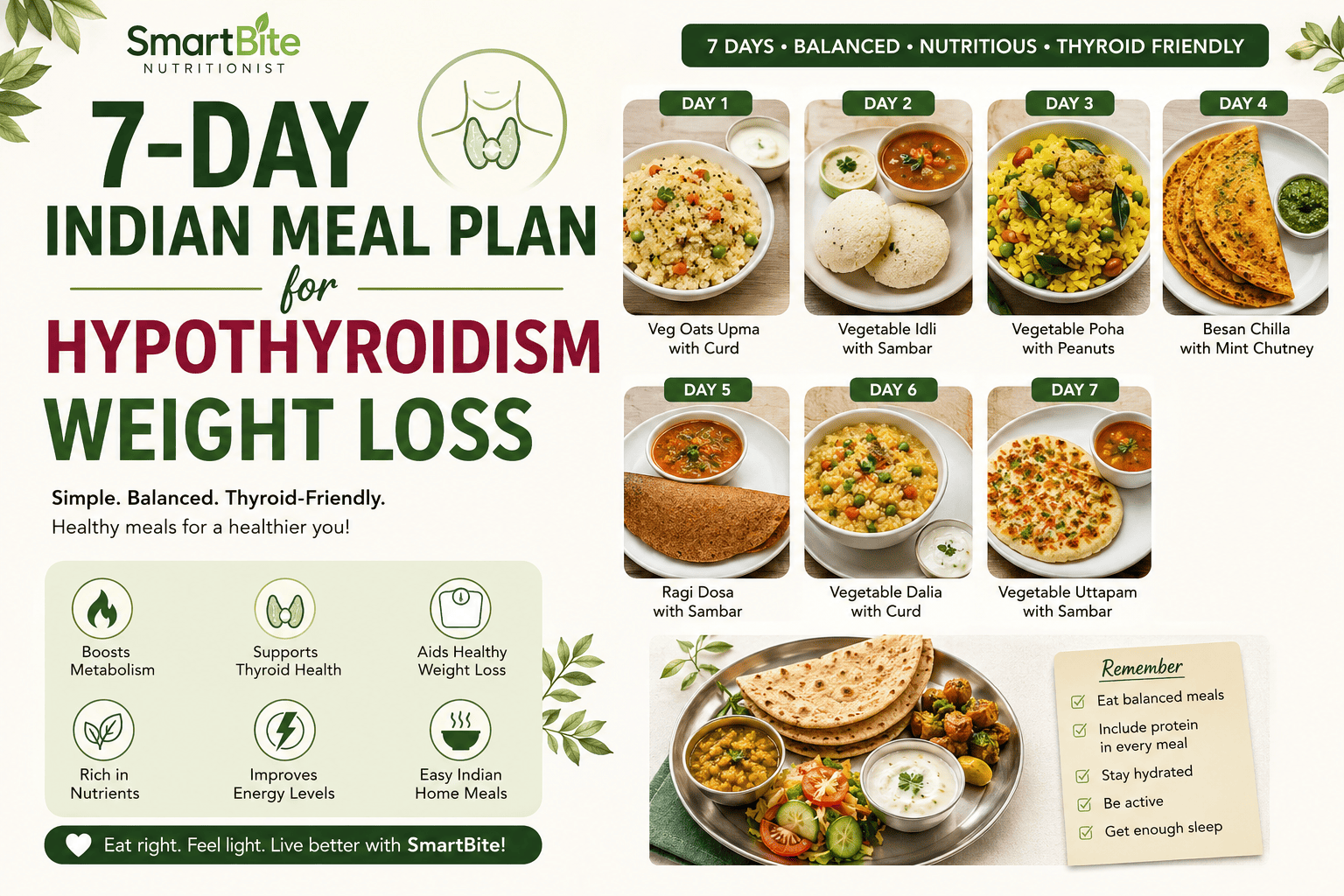
Hypothyroidism can affect energy levels, metabolism, and overall well-being. Many people with hypothyroidism also find it difficult to manage their weight. While there is no single food or diet that can cure hypothyroidism, a balanced eating plan, regular physical activity, proper sleep, and prescribed medical treatment can support healthy weight management.
The good news is that you do not need expensive or complicated foods. A simple Indian diet with vegetables, fruits, whole grains, pulses, and good sources of protein can be both healthy and practical.
This 7-day Indian meal plan for hypothyroidism weight loss is a general guide for people who want to make healthier food choices. Individual calorie and nutrient needs can vary based on age, weight, activity level, medical history, and thyroid treatment.
Important Tips Before Following the Meal Plan
If you are taking thyroid medication, follow your doctor’s instructions about when and how to take it. Do not stop or change your medication based only on diet advice.
For weight loss, focus on:
- Eating balanced meals
- Including protein in your diet
- Controlling portion sizes
- Eating more vegetables and fibre-rich foods
- Limiting highly processed foods and sugary drinks
- Staying physically active
- Getting enough sleep
Here is a simple 7-day Indian meal plan that can be adapted to your lifestyle.
Day 1
Breakfast: Vegetable oats upma with a bowl of curd.
Mid-morning: One apple or guava.
Lunch: Two small chapatis, moong dal, mixed vegetable sabzi, and cucumber salad.
Evening snack: Roasted chana with unsweetened tea.
Dinner: Paneer bhurji with vegetables and one small chapati.
Day 2
Breakfast: Vegetable idli with sambar.
Mid-morning: A small bowl of papaya.
Lunch: A controlled portion of rice, rajma, cooked vegetables, and salad.
Evening snack: Roasted makhana or a small handful of nuts.
Dinner: Grilled fish with sautéed vegetables. Vegetarians can choose paneer or another suitable protein source.
Day 3
Breakfast: Vegetable poha with a small amount of peanuts.
Mid-morning: One orange or another seasonal fruit.
Lunch: Two chapatis, chana dal, bhindi or beans sabzi, and salad.
Evening snack: Buttermilk with roasted chana.
Dinner: Vegetable moong dal khichdi with curd.
Day 4
Breakfast: Besan chilla with vegetables and mint chutney.
Mid-morning: A small handful of almonds or walnuts.
Lunch: Two chapatis, palak dal, mixed vegetables, and salad.
Evening snack: Homemade sprouts chaat.
Dinner: Egg bhurji with vegetables and one or two small chapatis. Paneer can be used as a vegetarian alternative.
Day 5
Breakfast: Ragi dosa with sambar.
Mid-morning: A bowl of seasonal fruit.
Lunch: Vegetable pulao in a controlled portion with raita and dal or grilled chicken.
Evening snack: Roasted makhana or peanuts.
Dinner: Vegetable soup with grilled paneer or chicken.
Day 6
Breakfast: Vegetable dalia with curd.
Mid-morning: One apple or guava.
Lunch: Two chapatis, masoor dal, lauki or mixed vegetable sabzi, and salad.
Evening snack: Buttermilk with roasted chana.
Dinner: Grilled fish or paneer with stir-fried vegetables.
Day 7
Breakfast: Vegetable uttapam with sambar.
Mid-morning: Papaya or another seasonal fruit.
Lunch: Two chapatis, dal, seasonal vegetables, salad, and curd.
Evening snack: A small handful of nuts or roasted makhana.
Dinner: Light vegetable khichdi with a protein source such as dal, paneer, egg, fish, or chicken.
Foods to Include in Your Diet
A balanced hypothyroidism diet does not need to be complicated. Try to include a variety of healthy foods throughout the week.
Good options include:
- Green and colourful vegetables
- Seasonal fruits
- Dal, chana, rajma, and other pulses
- Eggs, fish, and chicken for non-vegetarians
- Paneer and curd in suitable portions
- Whole grains and millets
- Nuts and seeds in controlled quantities
For people with a busy Bangalore lifestyle, meal planning can help avoid frequent ordering of unhealthy food. Preparing simple meals at home can make it easier to control ingredients and portions.
Simple Tips for Better Weight Management
Do not depend on crash diets or skip meals regularly. Extreme dieting can be difficult to maintain and may leave you feeling hungry and tired.
Instead, focus on eating enough protein, vegetables, and fibre-rich foods. Watch portion sizes, especially for rice, chapatis, snacks, sweets, and calorie-dense foods.
Try to stay physically active with walking, strength training, yoga, cycling, or any activity you enjoy. Regular movement can support overall health and help maintain muscle while losing weight.
Sleep is also important. Poor sleep can affect hunger, food choices, and energy levels.
Final Thoughts
Hypothyroidism does not mean you have to follow a strict or boring diet. A simple Indian meal plan with balanced portions, protein-rich foods, vegetables, fruits, and regular physical activity can support your weight management goals.
The best diet plan is one that fits your lifestyle and nutritional needs. If you are struggling with hypothyroidism and weight loss, a personalized plan from a qualified nutritionist can help you make healthier and more sustainable food choices.