
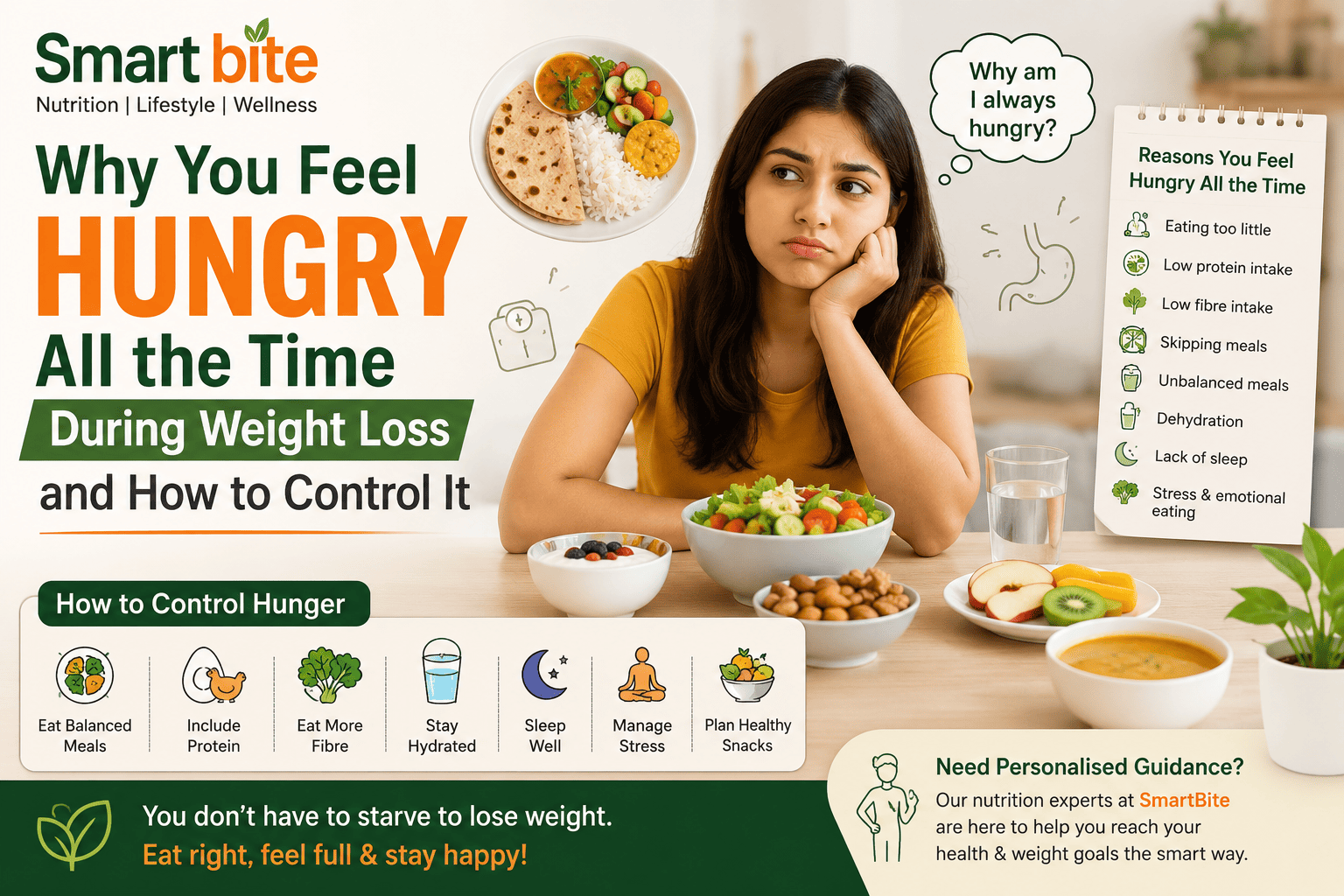
Starting a weight-loss journey can sometimes feel difficult, especially when you are hungry all the time. You may eat a meal, but within a short time, you start thinking about food again.
Many people believe that feeling constantly hungry means they are doing weight loss correctly. However, extreme hunger can make a diet difficult to follow and may lead to overeating later.
The good news is that you do not need to stay hungry to work towards a healthy weight. Understanding why you feel hungry during weight loss can help you make better food and lifestyle choices.
You Are Eating Too Little
One common reason for constant hunger is cutting too much food at once.
Some people drastically reduce their food intake or skip multiple meals to lose weight faster. While this may seem effective in the beginning, extreme restriction can increase hunger and make the diet difficult to maintain.
Instead of following a very low-calorie diet without guidance, focus on balanced meals and a sustainable eating pattern.
Your Meals Are Low in Protein
Protein can help you feel fuller after eating. If most of your meals contain mainly carbohydrates with very little protein, you may feel hungry again sooner.
Try including a suitable protein source in your meals, such as:
- Dal and other pulses
- Chana or rajma
- Paneer
- Tofu
- Curd
- Eggs
- Fish
- Chicken
The right amount of protein depends on individual factors such as your age, activity level, health condition, and overall diet.
You Are Not Eating Enough Fibre
Fibre-rich foods can add volume to meals and may help you feel satisfied.
Include more foods such as:
- Vegetables
- Fruits
- Whole grains
- Dal and beans
- Oats
- Seeds
Instead of eating only a small portion of rice or roti, try adding vegetables, dal, salad, and another suitable protein source to make the meal more balanced.
You Are Skipping Meals
Skipping meals may work for some people, but for others, it can lead to extreme hunger later in the day.
For example, if you skip breakfast and lunch, you may become so hungry in the evening that controlling portions becomes difficult.
A regular meal pattern that suits your lifestyle may help prevent extreme hunger.
Your Meals Are Not Balanced
A meal containing only carbohydrates may not keep you satisfied for long.
For example, instead of eating only rice or several rotis, try creating a more balanced plate.
A simple approach could include:
- ½ plate: Vegetables or salad
- ¼ plate: Protein-rich foods
- ¼ plate: Rice, roti, or another carbohydrate source
This is only a general guide. Individual needs can vary.
You Are Not Drinking Enough Water
Sometimes thirst can be confused with hunger.
Drinking water regularly throughout the day may help you stay hydrated. However, you should not use water as a way to suppress genuine hunger or replace proper meals.
Listen to your body’s hunger signals and maintain regular hydration.
Lack of Sleep Can Affect Your Appetite
Poor sleep can affect appetite and food choices. When you are tired, you may feel more interested in high-calorie snacks, sweets, or fast food.
Try to maintain a regular sleep schedule and get adequate rest as part of your overall weight-management routine.
Stress May Be Increasing Your Desire to Eat
Stress can affect eating habits in different ways. Some people eat less when stressed, while others experience stronger cravings for comfort foods.
Before reaching for a snack, take a moment to ask yourself:
“Am I physically hungry, or am I bored, stressed, tired, or simply craving something?”
This simple habit can help you better understand your eating patterns.
Your Weight-Loss Plan May Be Too Restrictive
A diet that completely removes your favourite foods can be difficult to follow for a long time.
For example, you do not necessarily need to completely avoid rice, roti, fruits, or other traditional foods to manage your weight.
A more practical approach is to focus on:
- Portion awareness
- Balanced meals
- Adequate protein
- More vegetables and fibre
- Limiting highly processed foods
- Regular physical activity
- Good sleep
A sustainable plan is usually easier to follow than an extremely restrictive one.
How to Control Hunger During Weight Loss
Here are some practical ways to manage hunger:
Eat Balanced Meals
Include a combination of protein, fibre-rich foods, carbohydrates, and healthy fats where appropriate.
Plan Healthy Snacks
If you genuinely feel hungry between meals, choose a satisfying option instead of waiting until you become extremely hungry.
Some options may include:
- Fruit with curd
- Roasted chana
- A small portion of nuts
- Makhana
- Boiled eggs
- Paneer or tofu
- Unsweetened yoghurt
Eat Slowly
Eating very quickly may make it harder to notice when you are satisfied. Try to eat slowly and pay attention to your hunger and fullness levels.
Avoid Extreme Diets
Very restrictive diets may increase hunger and make it harder to maintain healthy eating habits over time.
Don’t Ignore Genuine Hunger
Weight loss does not mean you need to feel hungry all day. Constant or extreme hunger may be a sign that your meal plan needs adjustment.
When Should You Consult a Dietitian?
If you constantly feel hungry, experience frequent cravings, or find it difficult to follow your current weight-loss plan, personalised nutrition guidance may help.
A weight loss dietitian can consider your lifestyle, food preferences, activity level, health history, and goals to create a more practical eating plan.
At SmartBite, personalised weight-loss programs focus on creating sustainable food habits instead of relying on extreme restrictions. The aim is to help you enjoy balanced Indian meals while working towards your health and weight-management goals.
Final Thoughts
Feeling hungry occasionally during weight loss can happen, but constant hunger should not be ignored.
Instead of simply eating less and less, look at the quality and balance of your meals. Adding adequate protein, fibre, and nutrient-rich foods, maintaining a regular eating pattern, managing stress, and getting enough sleep may help you control hunger more effectively.
The best weight-loss plan is not the one that makes you suffer through constant hunger. It is the one that supports your health and is practical enough to follow in the long term.