
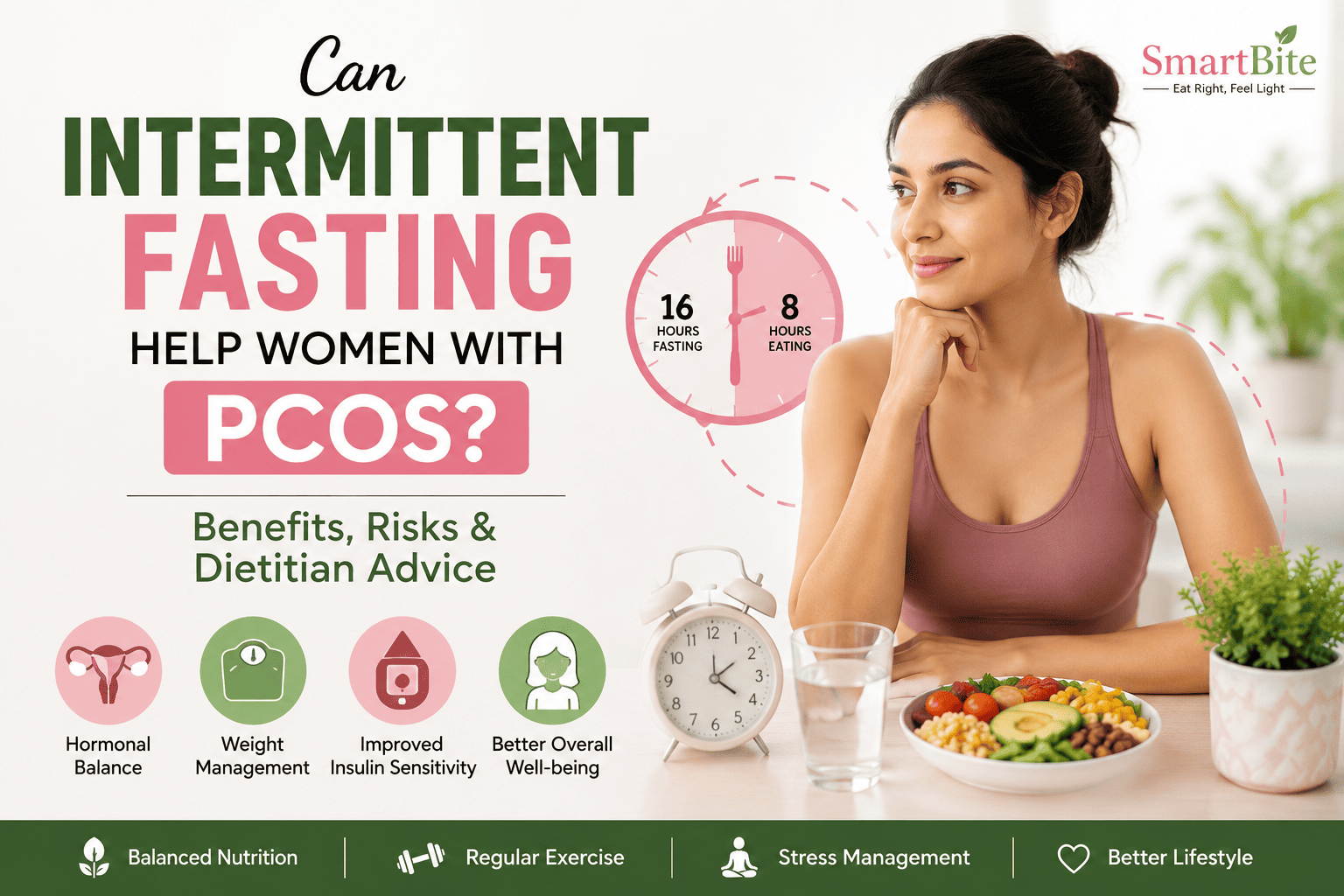
Polycystic Ovary Syndrome (PCOS) is one of the most common hormonal disorders affecting women of reproductive age. It can lead to irregular periods, weight gain, insulin resistance, acne, excess facial hair, and difficulty conceiving. Many women with PCOS struggle to lose weight even after following strict diets and regular exercise.
In recent years, intermittent fasting (IF) has gained popularity as a weight management strategy. But can it really help women with PCOS? Is it safe for everyone? In this article, we explore the benefits, risks, and expert PCOS dietitian advice to help you make an informed decision.
What is Intermittent Fasting?
Intermittent fasting is an eating pattern that alternates between periods of eating and fasting. Instead of focusing on what you eat, it emphasizes when you eat.
Some common fasting methods include:
- 12:12 Method: Fast for 12 hours and eat within a 12-hour window.
- 14:10 Method: Fast for 14 hours and eat during a 10-hour window.
- 16:8 Method: Fast for 16 hours and eat within an 8-hour window.
- 5:2 Method: Eat normally for five days and consume fewer calories on two non-consecutive days.
For women with PCOS, shorter fasting windows like 12:12 or 14:10 are generally more practical than extended fasting periods.
How PCOS Affects the Body
PCOS is often linked with insulin resistance, where the body’s cells do not respond effectively to insulin. As a result, the pancreas produces more insulin, which can increase androgen (male hormone) levels and worsen PCOS symptoms.
High insulin levels may contribute to:
- Weight gain
- Increased belly fat
- Irregular menstrual cycles
- Acne
- Excess hair growth
- Difficulty losing weight
Improving insulin sensitivity is one of the main goals of PCOS nutrition management.
Can Intermittent Fasting Help PCOS?
Intermittent fasting may benefit some women with PCOS when combined with a balanced, nutrient-rich diet.
- May Improve Insulin Sensitivity
Research suggests that reducing eating frequency and allowing time between meals may help improve insulin sensitivity in some people. Better insulin control can support blood sugar management and may reduce some PCOS symptoms.
- Can Support Weight Management
Many women with PCOS find weight loss challenging. When intermittent fasting helps reduce overall calorie intake, it may support gradual weight loss.
Even losing 5–10% of body weight can improve menstrual regularity and metabolic health in many women with PCOS.
- May Help Reduce Cravings
A structured eating schedule may reduce mindless snacking and frequent consumption of sugary foods, making it easier to maintain healthy eating habits.
- May Improve Energy Levels
Choosing balanced meals during the eating window may help stabilize blood sugar levels, reducing energy crashes throughout the day.
Risks of Intermittent Fasting for Women with PCOS
Intermittent fasting is not suitable for everyone. In some women, it may cause unwanted side effects.
Hormonal Stress
Long fasting periods may increase stress hormones in some individuals, which could affect menstrual cycles and overall hormonal balance.
Nutrient Deficiencies
Eating fewer meals can make it difficult to meet daily requirements for:
- Protein
- Iron
- Calcium
- Vitamin D
- Fibre
- Healthy fats
Overeating During Eating Windows
Some people compensate for fasting by eating large portions or choosing highly processed foods. This can reduce the potential benefits of fasting.
Not Suitable During Pregnancy
Women who are pregnant, breastfeeding, underweight, or have certain medical conditions should avoid intermittent fasting unless advised by a healthcare professional.
Who Should Avoid Intermittent Fasting?
Consult a healthcare professional before trying intermittent fasting if you:
- Are pregnant or breastfeeding
- Have diabetes and take medication
- Have a history of eating disorders
- Are underweight
- Experience frequent dizziness or low blood sugar
A registered dietitian can help determine whether intermittent fasting is appropriate for your individual needs.
Final Thoughts
Intermittent fasting may help some women with PCOS improve insulin sensitivity, manage weight, and develop healthier eating habits. However, it is not a one-size-fits-all solution. The benefits depend on choosing nutritious foods, maintaining a balanced lifestyle, exercising regularly, getting enough sleep, and managing stress.
If you’re considering intermittent fasting, start with a gentle fasting schedule and seek guidance from a qualified dietitian. A personalized nutrition plan is often the most effective way to manage PCOS safely and sustainably.