
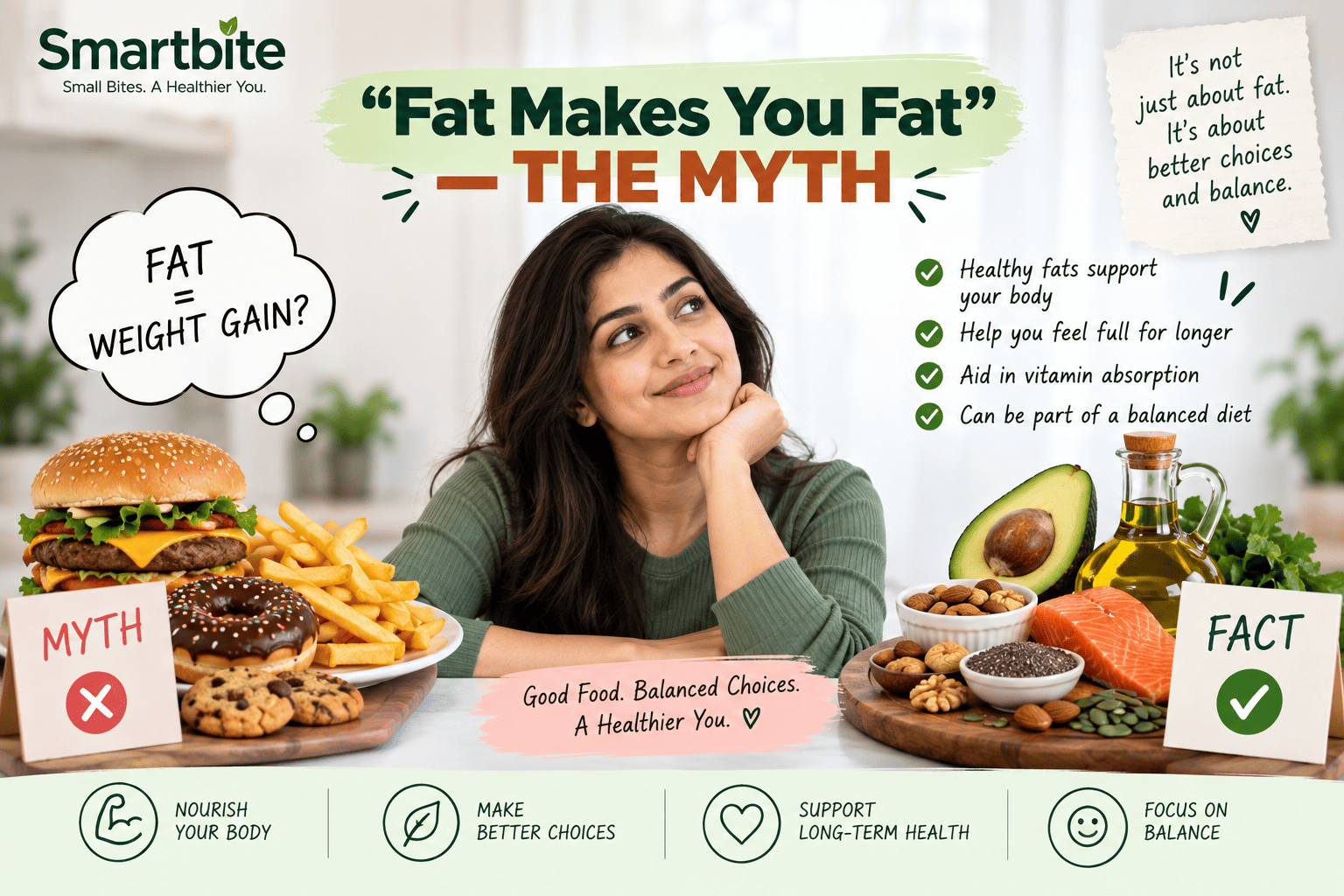
For years, people have been told that eating fat will automatically make them gain weight. Many people still avoid foods like nuts, seeds, avocado, and cooking oils because they believe that “fat makes you fat.”
But the truth is more simple: dietary fat does not automatically cause weight gain. What matters more is your overall diet, portion sizes, activity level, and how much energy you consume compared with how much your body uses.
Healthy fats can actually be an important part of a balanced diet.
Why Do People Think Fat Makes You Fat?
The idea came partly from the fact that fat contains more calories per gram than protein or carbohydrates. Fat provides about 9 calories per gram, while protein and carbohydrates provide about 4 calories per gram.
Because of this, eating very large amounts of high-fat foods can make it easier to consume more calories than your body needs.
However, this does not mean that every food containing fat causes weight gain. Your overall eating pattern matters much more than one nutrient.
For example, eating a small portion of nuts as part of a balanced meal is very different from regularly eating large portions of fried snacks, pastries, or ultra-processed foods.
Your Body Needs Dietary Fat
Fat is not something you need to completely remove from your diet. Your body needs dietary fat for several important functions.
Fat helps your body absorb fat-soluble vitamins such as vitamins A, D, E, and K. It also supports cell function and provides essential fatty acids that the body cannot make on its own.
Fat can also make meals more satisfying and enjoyable.
The goal is not to eat as little fat as possible. The goal is to choose better sources of fat and appropriate portions.
Not All Fats Are the Same
One of the biggest problems with the “fat makes you fat” idea is that it treats all fats as if they are identical.
They are not.
Healthy Unsaturated Fats
Unsaturated fats are commonly found in foods such as:
- Almonds and walnuts
- Peanuts
- Chia and flaxseeds
- Sesame seeds
- Avocados
- Olive oil
- Mustard oil
- Fatty fish
These foods can fit well into a balanced eating pattern.
Saturated Fat
Saturated fat is found in foods such as butter, ghee, full-fat dairy, fatty meats, and some processed foods.
These foods do not necessarily need to be completely avoided, but portions matter. For overall health, it is generally helpful to avoid getting too much saturated fat and to include more unsaturated fat sources.
Trans Fat
Artificial trans fats are a different story. They have been linked with increased health risks and should be avoided as much as possible. They may be present in some processed and commercially prepared foods.
Healthy Fat Can Still Be High in Calories
There is an important point to remember: healthy does not mean calorie-free.
Nuts, seeds, oils, nut butters, and avocado contain beneficial nutrients, but they are also energy-dense.
For example, adding several spoonfuls of peanut butter to meals every day can significantly increase calorie intake, even though peanut butter can be part of a healthy diet.
If your goal is weight loss, portion control still matters.
A small handful of nuts can be a useful snack. Eating an entire large packet while watching television is a different situation.
What About Cooking Oil?
Cooking oil is another area where people can become confused.
You do not need to completely stop using oil to lose weight. However, using large amounts can increase the calorie content of your meals without making them much more filling.
Measure your oil rather than pouring it directly from the bottle. Choose oils appropriate for your cooking style and overall dietary needs, and focus on using reasonable amounts.
Fat Can Help You Feel Satisfied
Meals containing some fat may feel more satisfying than meals that are extremely low in fat. When combined with protein and fiber-rich foods, healthy fats can help create balanced meals.
For example, a meal containing vegetables, dal, whole-grain roti, and a moderate amount of nuts or seeds can be more satisfying than a meal based only on refined carbohydrates.
This can make it easier to follow a healthy eating pattern without constantly feeling hungry.
So, Does Eating Fat Make You Fat?
Not by itself.
Weight gain happens when you consistently consume more energy than your body needs over time. Fat can contribute to excess calorie intake because it is energy-dense, but carbohydrates and protein can also contribute to weight gain when consumed in excess.
Instead of asking, “Should I stop eating fat?” ask:
“Which fats am I eating, how much am I eating, and what does my overall diet look like?”
This is a much more useful way to think about nutrition.
How to Include Fat in a Healthy Diet
You can follow a few simple habits:
- Add a small portion of nuts or seeds to your meals.
- Use cooking oils in moderate amounts.
- Choose fish when appropriate for your diet.
- Include natural sources of unsaturated fats.
- Limit foods containing artificial trans fats.
- Keep fried and highly processed foods occasional.
- Pay attention to portion sizes, especially with oils, nuts, and spreads.
- Combine healthy fats with vegetables, protein, and fiber-rich foods.
Final Thoughts
The statement “fat makes you fat” is an oversimplification. Dietary fat is an important nutrient, and removing it completely is neither necessary nor ideal for most people.
The better approach is to focus on the type and amount of fat you eat. Choose nutritious sources such as nuts, seeds, fish, and suitable cooking oils while keeping portions reasonable.
For healthy weight management, look at your complete diet rather than blaming one nutrient. A balanced diet, regular physical activity, good sleep, and sustainable eating habits are far more important than completely avoiding fat.
If you are unsure how much dietary fat you need or which sources are best for your goals, a qualified nutritionist can help create a personalized eating plan based on your lifestyle and nutritional needs.