
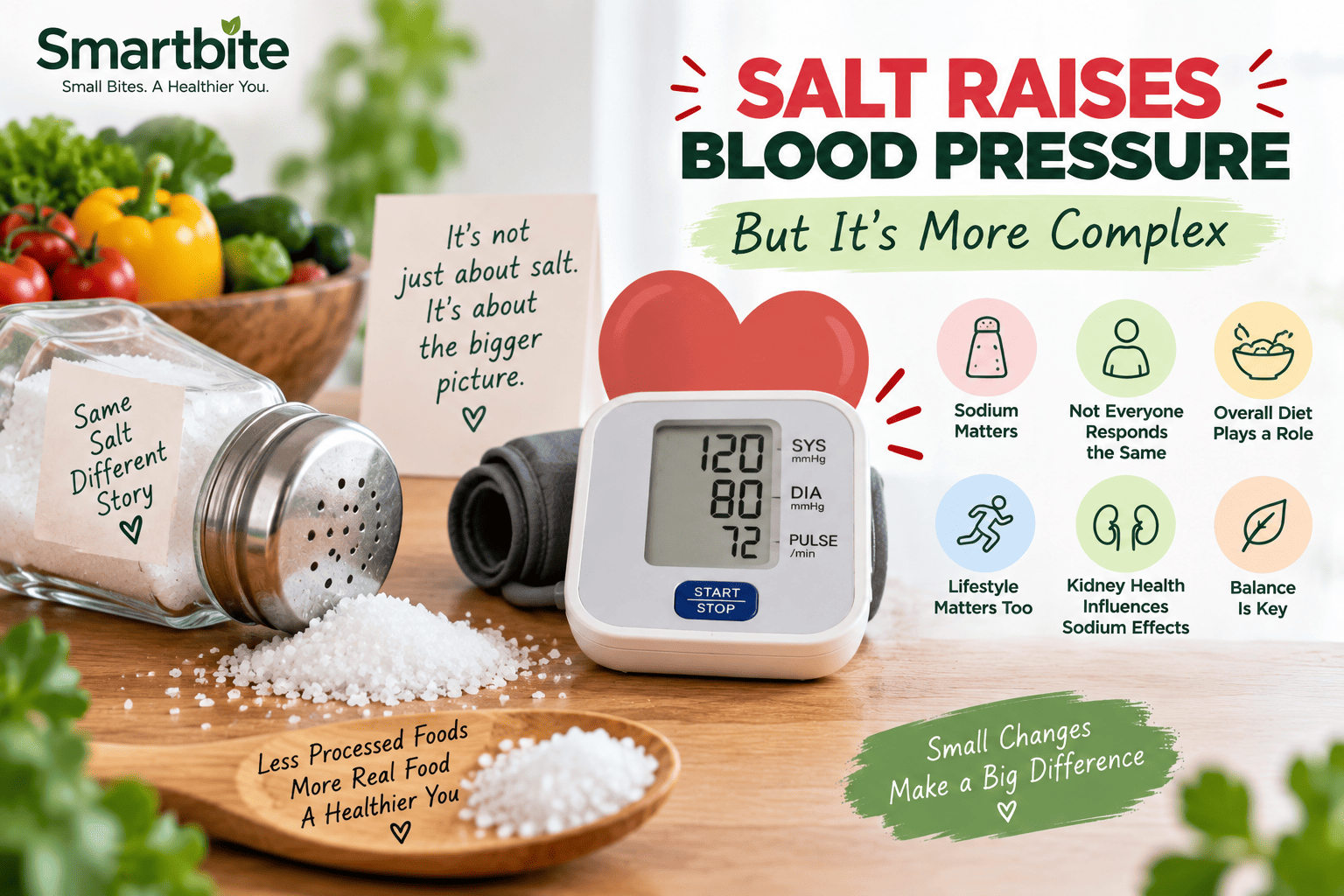
For years, we have heard a simple health warning: “Salt raises blood pressure.” This advice is not completely wrong, but the relationship between salt and blood pressure is more complex than it sounds.
Salt contains sodium, and sodium plays an important role in the body. Your body needs some sodium to maintain fluid balance, support nerves, and help muscles work properly. However, consuming too much sodium can contribute to higher blood pressure, especially in people who are sensitive to salt.
So, should you completely stop eating salt? Not necessarily. The better approach is to understand how sodium affects your body and where most of the salt in your diet comes from.
How Does Salt Affect Blood Pressure?
Sodium helps control the amount of fluid in your body. When you consume a high amount of sodium, your body may retain more water. This can increase the amount of fluid in your bloodstream and, in some people, contribute to higher blood pressure.
However, not everyone responds to sodium in exactly the same way. Some people are more salt-sensitive, meaning their blood pressure changes more noticeably when they consume more sodium.
Age, genetics, kidney health, overall diet, physical activity, and other health factors can influence how your body responds to sodium.
Salt Is Not the Only Factor
Blood pressure is affected by many parts of your lifestyle, not just salt.
Body weight, physical activity, stress, sleep, alcohol intake, smoking, genetics, and overall diet can all play a role.
This is why simply removing salt from your meals may not solve every blood pressure problem.
For example, someone may eat less table salt but still consume a lot of packaged foods, processed snacks, instant noodles, sauces, and restaurant meals. These foods can contain significant amounts of sodium.
Where Does Most Sodium Come From?
Many people think the salt shaker is the biggest source of sodium in their diet. In reality, a large amount can come from processed and packaged foods.
Common sources include:
- Instant noodles and ready-to-eat meals
- Packaged soups
- Chips and salty snacks
- Pickles and papads
- Processed meats
- Packaged sauces and dressings
- Some breads and bakery products
- Restaurant and takeaway foods
This means that reducing sodium is not simply about putting less salt on your plate. It is also about looking at the foods you eat regularly.
What About Indian Food?
Indian meals can be healthy and flavorful without excessive salt. Foods such as dal, vegetables, roti, rice, fruits, curd, beans, and fresh salads can form part of a balanced diet.
The challenge often comes from foods such as pickles, papad, namkeen, packaged snacks, instant foods, and heavily salted restaurant dishes.
Instead of relying on extra salt for flavor, try using spices and herbs such as cumin, coriander, ginger, garlic, turmeric, black pepper, lemon, and fresh coriander.
These ingredients can make food flavorful without adding large amounts of salt.
Potassium Also Matters
When talking about sodium and blood pressure, it is important not to ignore potassium.
Potassium-rich foods include bananas, oranges, tomatoes, spinach, beans, lentils, potatoes, and many other fruits and vegetables.
A diet rich in fruits and vegetables can provide potassium along with fiber and other nutrients. However, people with certain kidney conditions or those taking specific medications may need to be careful about potassium intake and should follow their healthcare professional’s advice.
Should You Stop Eating Salt Completely?
For most people, completely eliminating salt is unnecessary and can make food difficult to enjoy. The goal is to avoid excessive sodium intake while maintaining a balanced diet.
If you have high blood pressure, your doctor or dietitian may recommend a specific sodium limit based on your health and treatment plan.
It is also useful to read nutrition labels when buying packaged foods. Compare products and choose options with less sodium when possible.
Final Thoughts
The statement “salt raises blood pressure” has some truth, but it does not tell the whole story. Sodium can increase blood pressure, particularly in people who are salt-sensitive, but blood pressure is influenced by many dietary and lifestyle factors.
Rather than fearing salt completely, focus on reducing excessive sodium from packaged and highly processed foods, eating more fresh foods, including suitable potassium-rich foods, staying active, and maintaining a healthy lifestyle.
If you have high blood pressure or another health condition, speak with a qualified healthcare professional or nutritionist before making major changes to your diet. A personalized approach can help you manage sodium intake without unnecessarily restricting nutritious foods.