
- Many women with PCOS have insulin resistance, so steady blood sugar matters.
- Start the day with protein and avoid long gaps between meals.
- Use the weekend to plan meals and batch-cook protein and grains.
- Move regularly through the workday and add two or three short strength sessions a week.
- Sleep, stress management and hydration all support hormone balance.
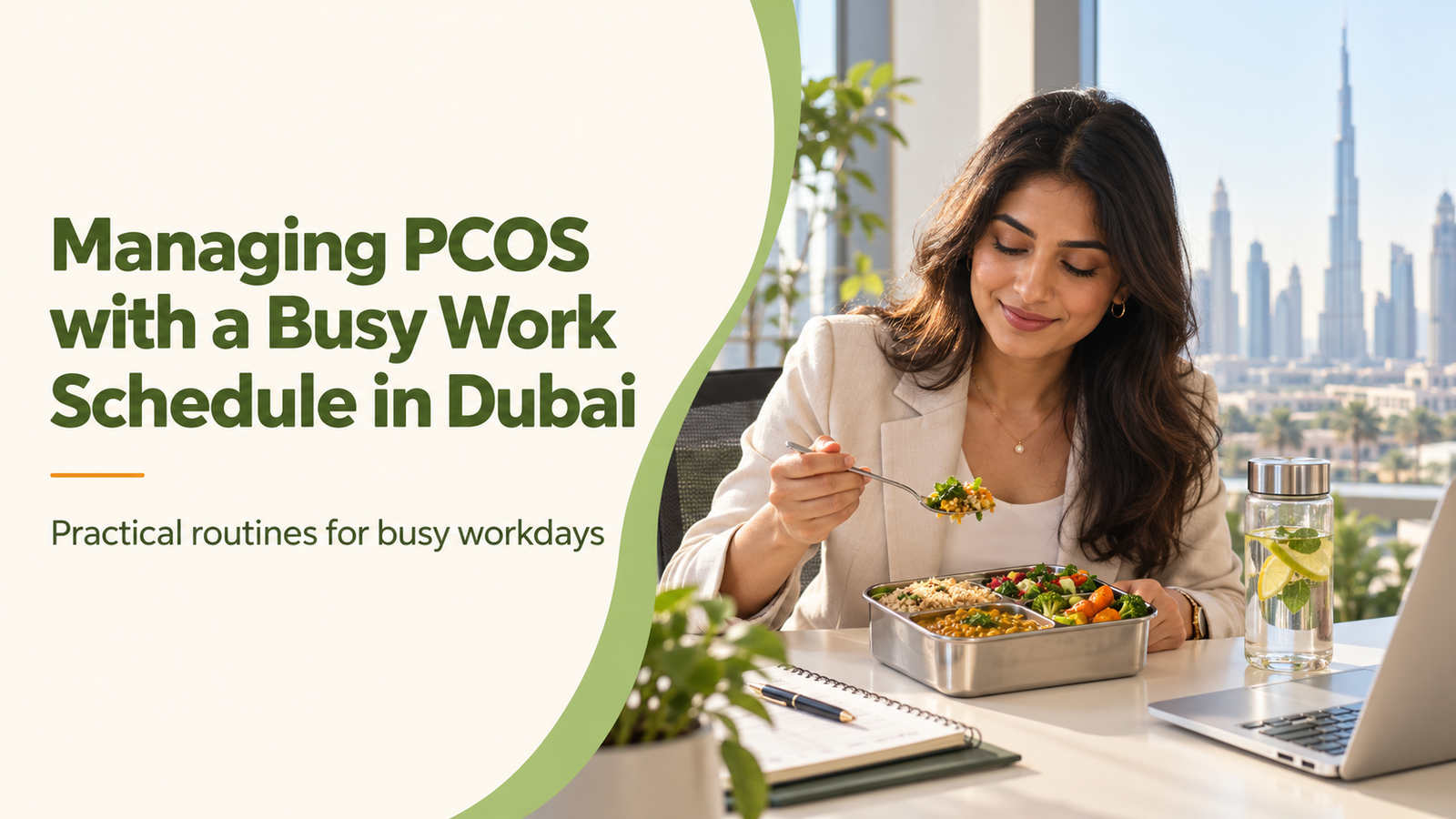
Polycystic ovary syndrome (PCOS) is one of the most common hormonal conditions in women of reproductive age. It can affect periods, weight, skin, hair, energy and mood. Managing it well usually depends on daily habits: what you eat, how you move, how well you sleep and how you handle stress.
That can feel hard when you work long hours in Dubai, spend time in traffic, eat at your desk and get home late. This guide from our Dietitian & Nutritionist shares realistic ways to manage PCOS around a busy schedule.
Why lifestyle matters so much in PCOS
Many women with PCOS have insulin resistance, which means the body has to produce more insulin to keep blood sugar normal. Higher insulin levels can increase androgen hormones and make weight gain, cravings and irregular cycles more likely. Food choices, regular meals, activity and sleep all influence how your body handles insulin, which is why lifestyle changes are a key part of PCOS care alongside any treatment from your doctor.
The common challenges of a busy work life
- Skipping breakfast and then feeling very hungry by lunch
- Long gaps between meals, followed by sugary snacks in the afternoon
- Relying on food delivery or office snacks
- Sitting for most of the day, in the office and in the car
- Late dinners and short sleep
- Stress from deadlines and long hours
The aim is not perfection. Small, repeatable changes make the biggest difference.
1. Start the day with protein
A breakfast with protein and fibre keeps blood sugar steadier through the morning and reduces cravings later. Quick options include:
- Greek yoghurt with berries and seeds
- Vegetable omelette or boiled eggs with wholegrain toast
- Besan or moong dal chilla with mint chutney
- Overnight oats with milk, chia seeds and nuts, prepared the night before
2. Use the weekend to plan ahead
With the UAE weekend on Saturday and Sunday, set aside an hour to make the week easier:
- Plan your lunches and dinners for the week.
- Cook a batch of protein such as grilled chicken, boiled chickpeas, dal or paneer.
- Wash and chop vegetables, and cook a pot of brown rice, quinoa or millet.
- Pack snacks for your office drawer.
3. Build a PCOS-friendly plate
For lunch and dinner, aim for half the plate vegetables, a quarter protein and a quarter complex carbohydrates. Always pairing carbohydrates with protein and fibre helps reduce blood sugar spikes.
4. Avoid long gaps between meals
Going five or six hours without food often ends in grabbing whatever is available. Keep simple snacks at your desk:
- A handful of almonds or walnuts
- Roasted chana or makhana
- A fruit with a few nuts
- Plain yoghurt or buttermilk from the office fridge
- Vegetable sticks with hummus
5. Choose wisely when ordering in
When you order lunch or dinner, look for grilled protein with salad or vegetables, lentil-based dishes, or bowls with whole grains. Ask for sauces on the side and skip sugary drinks.
6. Move more during the workday
Regular movement improves how your body uses insulin, even without intense workouts.
- Stand up and walk for a few minutes every hour.
- Take a 10 to 15 minute walk after lunch, indoors if it is hot.
- Use the stairs where you can.
- Add two or three short strength sessions a week at home or in the gym; strength training is especially helpful for insulin sensitivity.
In the hotter months, mall walking, indoor gyms and home workouts are all good options.
7. Protect your sleep
Short or poor sleep is linked to stronger cravings and higher stress hormones. Aim for seven to eight hours where possible, keep a regular bedtime, avoid screens just before bed, and try not to eat a heavy meal late at night.
8. Manage stress
Ongoing stress can affect hormones and eating habits. Short breathing exercises, a walk, yoga or simply switching off from work emails in the evening all help. Find one habit you can stick with.
9. Stay hydrated
Air-conditioned offices and hot weather outside mean you may lose more fluid than you notice. Keep a water bottle at your desk and limit sugary drinks and very sweet coffees.
When to see your doctor
If your periods are very irregular or absent, you have heavy bleeding, sudden weight changes, or you are planning a pregnancy, speak to your gynaecologist or doctor. A Dietitian & Nutritionist works alongside your medical care to build an eating plan that suits your reports, symptoms and routine.
Frequently asked questions
Can PCOS be managed with diet?
Diet and lifestyle are a core part of managing PCOS and can improve cycles, weight, energy and cravings. Some women also need medical treatment, so it is best to work with both your doctor and a Dietitian & Nutritionist.
Do I need to cut out all carbohydrates?
No. Choose complex carbohydrates in sensible portions and pair them with protein and fibre.
Is intermittent fasting good for PCOS?
It suits some women but not others. Regular, balanced meals are a safer starting point, especially if fasting leads to overeating later.
Want a plan made for your routine in the UAE?
Dt. Nazish Akhtar, Dietitian & Nutritionist, offers online consultations for clients in Dubai and across the UAE, with personalised weight loss and PCOS programmes built around the food you already eat.
This article is for general information and does not replace advice from your doctor. If you have a medical condition or take regular medication, speak to your doctor before changing your diet.
