- Plan your meals first, then write your list, and shop after eating.
- Fill most of your trolley with vegetables, fruit, protein and whole grains.
- Read labels per 100 g: check sugar, salt, fibre and the ingredients list.
- Frozen vegetables and pulses are healthy, budget-friendly staples.
- Use simple swaps, like plain yoghurt with fruit instead of flavoured yoghurt.
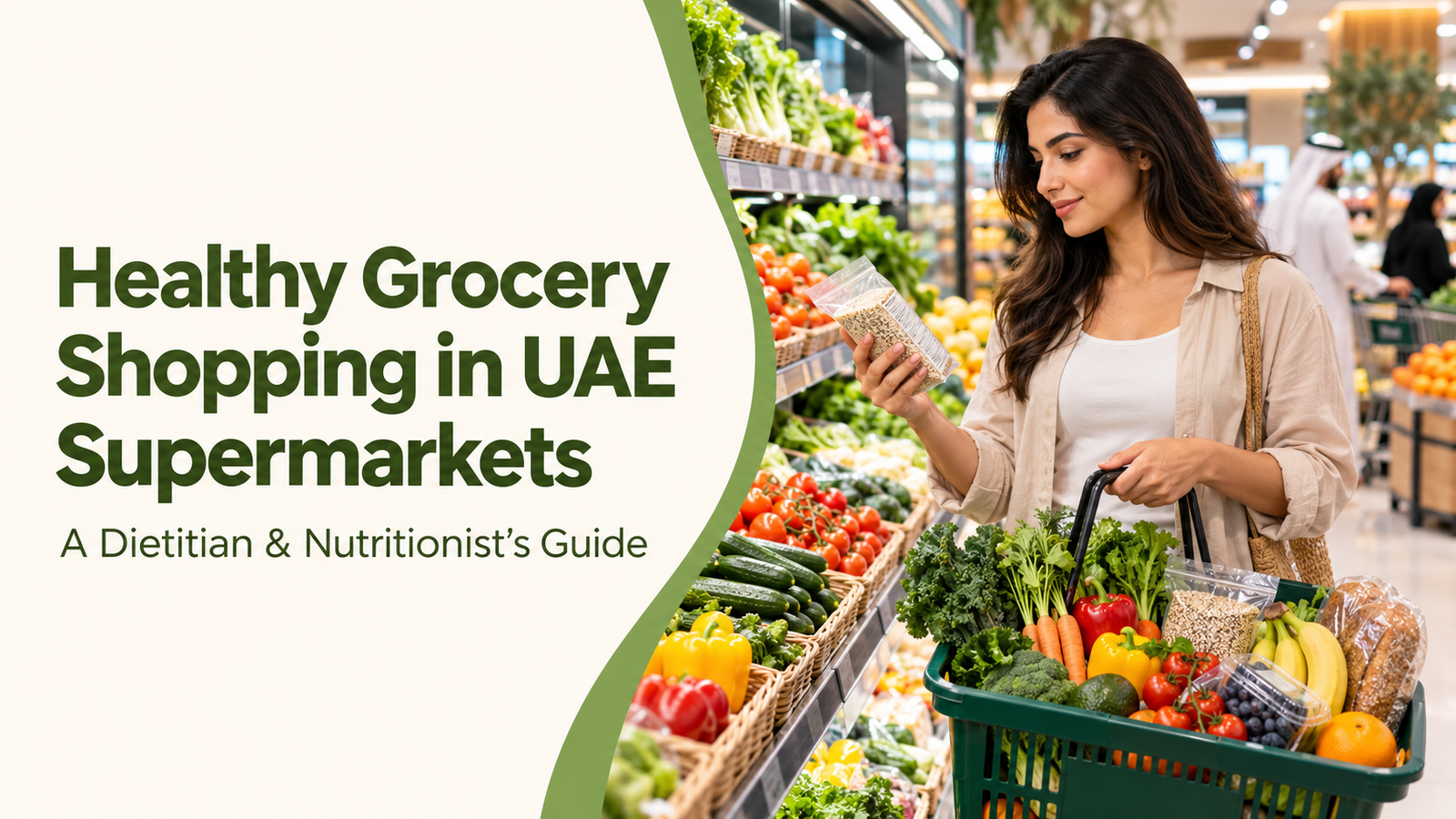
A healthy week starts in the supermarket. If your kitchen is stocked with the right foods, healthy meals become the easy choice, even on busy days. UAE supermarkets such as Carrefour, Lulu, Union Coop and Spinneys offer an enormous range of fresh and packaged foods from around the world, which is wonderful, but it can also make it harder to know what to choose.
Here is a simple guide from our Dietitian & Nutritionist to help you shop smarter, whether you shop in store or order online.
1. Plan before you shop
- Plan your main meals for the week, then write your list from that plan.
- Check what you already have so you do not buy duplicates.
- Shop after a meal, not when you are hungry; hungry shopping often means more snacks in the trolley.
- If you order online, save a “healthy basics” list in the app so you can reorder quickly.
2. Fill most of your trolley with fresh food
Start with the fresh produce, protein and dairy sections, and spend less time in the aisles with biscuits, crisps and sugary drinks.
Vegetables and fruit
- Aim for a variety of colours: leafy greens, tomatoes, cucumbers, peppers, carrots, beetroot, cauliflower, okra and gourds.
- In the cooler months, look out for vegetables from local UAE farms, which are often fresher and good value.
- Frozen vegetables and berries are just as nutritious as fresh, last longer and are handy for busy weeks.
- Keep fruit visible at home so it becomes the easy snack.
Protein
- Eggs, chicken, fish and seafood
- Lentils, chickpeas, kidney beans and other pulses, dried or tinned (rinse tinned pulses to reduce salt)
- Paneer, tofu, Greek yoghurt, labneh and low-fat cheese
Dairy
Plain yoghurt, laban and milk are good choices. Flavoured yoghurts and milk drinks often contain a lot of added sugar, so choose plain and add fruit yourself.
3. Choose better grains and staples
- Oats, brown or red rice, millets, quinoa, bulgur and whole-wheat pasta
- Whole-wheat flour or multigrain atta
- Bread with “whole wheat” or “wholegrain” as the first ingredient
4. Learn to read food labels
Labels help you compare products quickly. Use the “per 100 g” column to compare similar items fairly.
- Ingredients list: ingredients are listed from most to least. If sugar, glucose syrup or refined flour is near the top, it is a less healthy choice.
- Sugar: look for lower sugar options, especially in cereals, granola, yoghurts, sauces and drinks.
- Salt or sodium: processed meats, instant noodles, ready meals, sauces and snacks can be very salty.
- Fibre: higher fibre is better in breads, cereals and crackers.
- Serving size: check how many servings are in the pack; a small packet can contain two or more.
Be careful with words like “natural”, “multigrain” or “diet” on the front of packs. Always check the label on the back.
5. Healthy snacks to keep at home
- Unsalted nuts and seeds
- Roasted chickpeas or makhana
- Fruit, and vegetable sticks with hummus
- Plain popcorn
- Dates, enjoyed in small portions of one or two
6. Smart swaps
- Sugary cereal → plain oats with fruit
- Fruit yoghurt → plain yoghurt with berries
- Fizzy drinks and juice → water, sparkling water or buttermilk
- White bread → wholegrain bread
- Crisps → roasted chickpeas or nuts
- Creamy dressings → olive oil, lemon and herbs
7. Eating well on a budget
- Buy pulses, oats, rice and frozen vegetables in larger packs; they keep well.
- Choose seasonal produce and compare prices per kilo.
- Use supermarket offers for staples you already use, not for extra snacks.
- Cook in batches and use leftovers for lunches.
A sample weekly basics list
- Produce: spinach, tomatoes, cucumbers, onions, carrots, peppers, a seasonal vegetable, bananas, apples, berries
- Protein: eggs, chicken or fish, lentils, chickpeas, paneer or tofu
- Dairy: plain yoghurt, milk, laban
- Grains: oats, brown rice or millets, whole-wheat atta or bread
- Extras: nuts, seeds, olive oil, herbs and spices
Frequently asked questions
Are frozen vegetables healthy?
Yes. They are frozen soon after harvest, keep most of their nutrients and are a convenient way to eat more vegetables.
Is brown bread always healthier than white bread?
Not always. Some brown breads are coloured white bread. Check that whole wheat or wholegrain is the first ingredient.
Is online grocery shopping better for healthy eating?
It can be, because you shop from a list and avoid impulse buys at the checkout.
Want a plan made for your routine in the UAE?
Dt. Nazish Akhtar, Dietitian & Nutritionist, offers online consultations for clients in Dubai and across the UAE, with personalised weight loss and PCOS programmes built around the food you already eat.
This article is for general information and does not replace advice from your doctor. If you have a medical condition or take regular medication, speak to your doctor before changing your diet.
