Polycystic Ovary Syndrome (PCOS) is one of the most common hormonal disorders affecting women of reproductive age. It can cause irregular periods, weight gain, acne, excessive hair growth, insulin resistance, and fertility issues. While there is no permanent cure for PCOS, the right diet can play a major role in managing its symptoms and improving overall health.
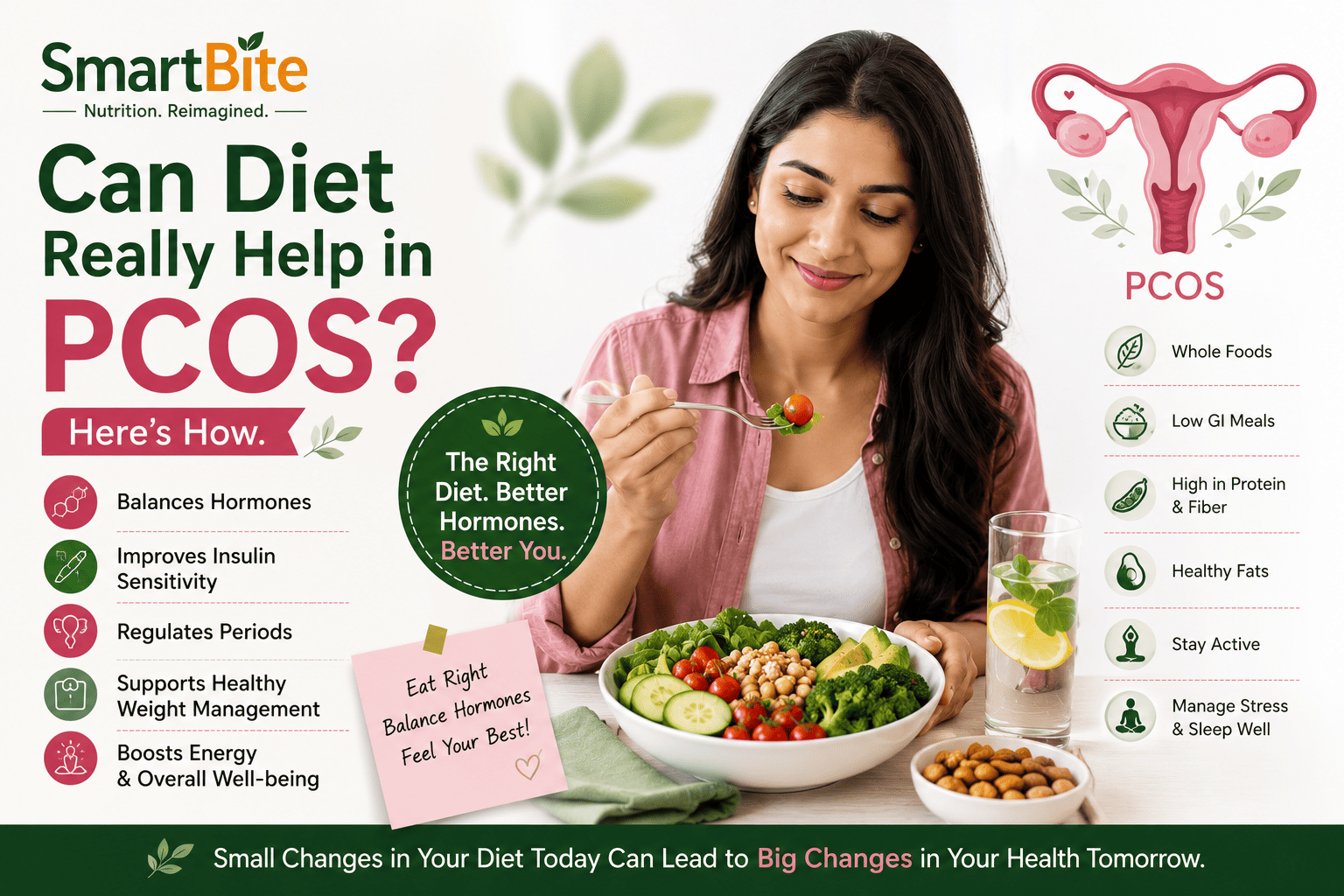
Many women wonder, Can diet really help in PCOS? The answer is yes. A balanced and personalized diet can improve hormone balance, regulate blood sugar levels, support healthy weight management, and even improve menstrual cycles.
At SmartBite Diet & Nutrition, we help women with PCOS make sustainable lifestyle changes through customized nutrition plans that fit their daily routine and health goals.
Understanding PCOS
PCOS occurs when the ovaries produce higher-than-normal levels of androgens (male hormones). This hormonal imbalance affects ovulation and leads to symptoms such as:
- Irregular or missed periods
- Weight gain
- Difficulty losing weight
- Acne
- Hair fall
- Excess facial or body hair
- Difficulty getting pregnant
- Fatigue
Many women with PCOS also have insulin resistance, making it harder for the body to use insulin effectively.
How Diet Helps Manage PCOS
A healthy diet doesn’t cure PCOS, but it can significantly reduce symptoms and improve overall health.
Improves Insulin Resistance
Insulin resistance is common in women with PCOS. High insulin levels increase androgen production, which affects ovulation and causes hormonal imbalance.
Eating foods with a low glycemic index helps control blood sugar and improve insulin sensitivity.
Choose foods like:
- Whole grains
- Oats
- Brown rice
- Millets
- Lentils
- Beans
- Green vegetables
Supports Healthy Weight Loss
Even a small amount of weight loss can improve PCOS symptoms.
A balanced diet helps:
- Reduce body fat
- Improve metabolism
- Lower insulin levels
- Support regular ovulation
Crash diets should be avoided because they are difficult to maintain and may worsen hormonal imbalance.
Helps Regulate Periods
Healthy eating supports hormone balance, which can help improve menstrual regularity over time.
A diet rich in protein, fiber, healthy fats, vitamins, and minerals supports better reproductive health.
Reduces Inflammation
Women with PCOS often experience chronic inflammation.
Anti-inflammatory foods include:
- Leafy vegetables
- Berries
- Tomatoes
- Fatty fish
- Nuts
- Seeds
- Olive oil
Reducing processed foods and sugary snacks can also lower inflammation.
Best Foods for PCOS
A PCOS-friendly diet includes nutrient-rich foods that help balance hormones and stabilize blood sugar.
Recommended foods include:
- Fresh vegetables
- Fruits in moderation
- Whole grains
- Lean proteins
- Eggs
- Fish
- Low-fat dairy
- Nuts and seeds
- Healthy fats
- Legumes
Eating balanced meals every 3–4 hours can help prevent blood sugar spikes.
Foods to Limit
Certain foods may worsen insulin resistance and inflammation.
Try to reduce:
- Sugary drinks
- White bread
- Bakery products
- Refined flour
- Fried foods
- Fast food
- Packaged snacks
- Excess sweets
Instead of completely avoiding your favorite foods, practice moderation and portion control.
Importance of Protein
Protein helps keep you full for longer and supports stable blood sugar levels.
Good protein sources include:
- Eggs
- Paneer
- Chicken
- Fish
- Tofu
- Greek yogurt
- Lentils
- Chickpeas
Include protein in every meal for better appetite control.
Don’t Forget Healthy Lifestyle Habits
Diet works best when combined with healthy daily habits.
Make sure you:
- Exercise for at least 30 minutes most days
- Drink enough water
- Sleep 7–8 hours every night
- Manage stress through yoga or meditation
- Avoid smoking and excessive alcohol
Small lifestyle changes can have a big impact on PCOS management.
Why Personalized Diet Plans Matter
Every woman experiences PCOS differently. Age, weight, lifestyle, activity level, and medical history all influence nutritional needs.
A personalized diet plan ensures that you receive the right balance of nutrients while addressing your specific symptoms and health goals.
When Should You Consult a Dietitian?
You should seek professional guidance if you have:
- Irregular periods
- Difficulty losing weight
- PCOS diagnosis
- Fertility concerns
- Thyroid disorders
- Diabetes or prediabetes
A qualified dietitian can help you create a realistic and sustainable nutrition plan.
Why Choose SmartBite Diet & Nutrition?
At SmartBite Diet & Nutrition, we specialize in personalized nutrition plans for women with PCOS.
Our services include:
- Customized PCOS diet plans
- Weight management programs
- Fertility nutrition
- Diabetes nutrition
- Thyroid diet plans
- Ongoing progress monitoring
- Practical meal planning
We focus on long-term lifestyle changes rather than temporary diets, helping you achieve better health and sustainable results.