
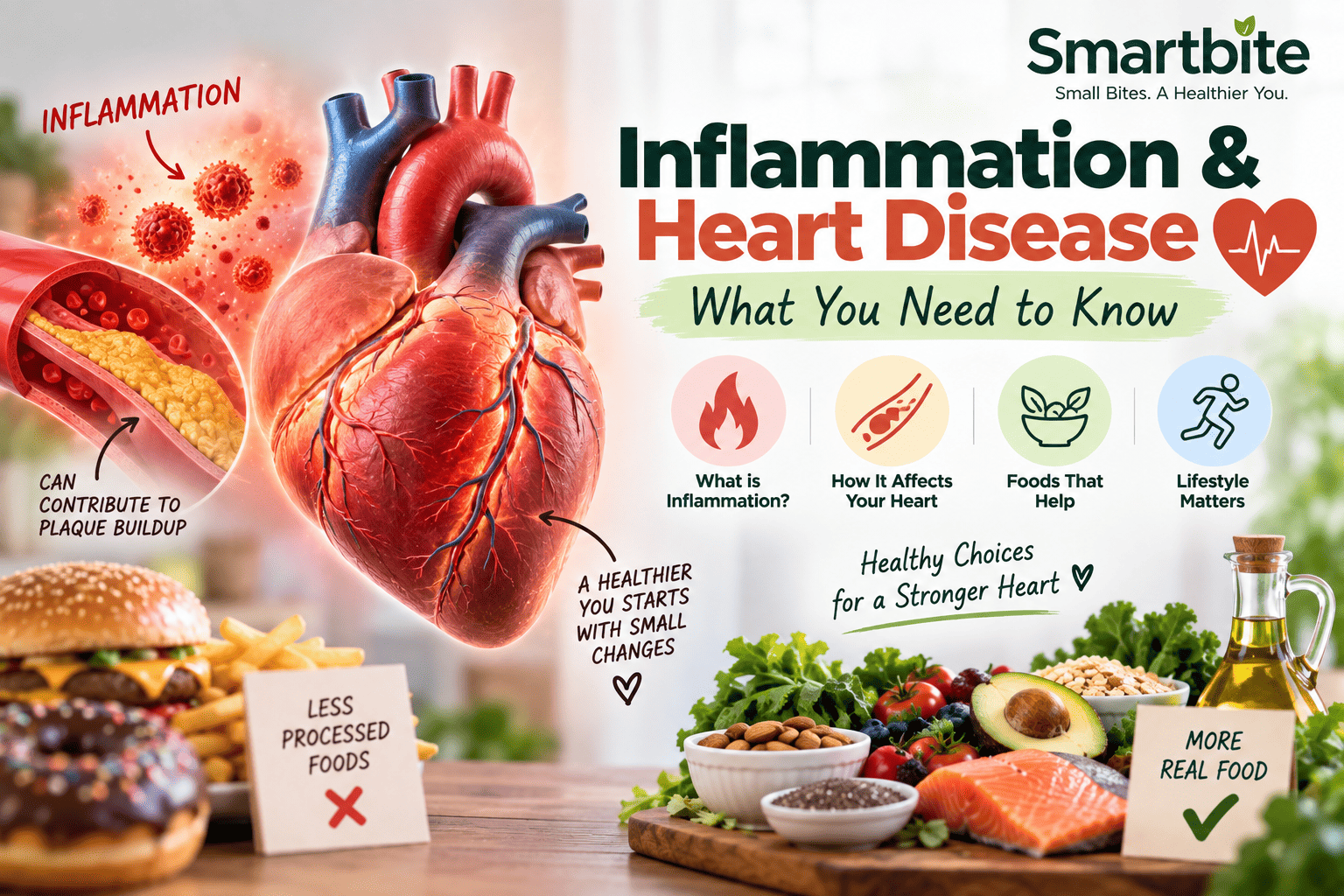
When we think about heart disease, we often hear about cholesterol, high blood pressure, smoking, and lack of exercise. But there is another important factor that deserves attention: inflammation.
Inflammation is a normal part of the body’s defense system. It helps the body respond to infections and injuries. The problem can occur when inflammation continues for a long time. Chronic, low-level inflammation is associated with the development and progression of cardiovascular disease, particularly a condition called atherosclerosis.
Understanding the connection between inflammation and heart health can help you make better lifestyle and food choices.
What Is Inflammation?
Inflammation is the body’s natural response to injury, infection, or other problems. Short-term inflammation can be helpful because it helps the body protect and repair itself.
For example, if you cut your finger, the area may become red, swollen, and painful. This is an example of acute inflammation.
Chronic inflammation is different. It can continue at a low level for months or years without obvious symptoms. Researchers have found that chronic inflammation can play an important role in cardiovascular disease.
How Is Inflammation Connected to Heart Disease?
One important connection is through atherosclerosis, which is the buildup of plaque inside the arteries.
Plaque can contain cholesterol, inflammatory cells, calcium, and other substances. As plaque develops, it can narrow the arteries and reduce blood flow. Inflammation can contribute to the progression of plaque and, in some cases, make a plaque more likely to rupture and contribute to a blood clot. This can lead to serious events such as a heart attack or stroke.
This does not mean inflammation is the only cause of heart disease. Heart health is influenced by many factors, including cholesterol, blood pressure, diabetes, smoking, physical activity, genetics, and diet.
What Can Increase Chronic Inflammation?
Several lifestyle and health factors can contribute to chronic inflammation or cardiovascular risk.
These may include:
- Smoking
- Physical inactivity
- Excess body weight
- Poor-quality diet
- Long-term stress
- Poor sleep
- Uncontrolled blood pressure
- High LDL cholesterol
- Diabetes and metabolic problems
These factors often overlap. For example, an unhealthy diet and lack of physical activity can contribute to weight gain, blood sugar problems, and other cardiovascular risk factors.
Can Food Help Reduce Inflammation?
Food cannot completely prevent or cure heart disease, but a healthy eating pattern can support heart health.
Instead of looking for one “anti-inflammatory food,” focus on your overall diet.
Include more:
Fruits and Vegetables : Fruits and vegetables provide fiber, vitamins, minerals, and plant compounds that support overall health.
Choose a variety of colorful foods such as berries, oranges, apples, tomatoes, carrots, spinach, broccoli, beans, and other vegetables.
Whole Grains : Oats, barley, whole-wheat products, brown rice, and other minimally processed whole grains can provide fiber and other nutrients.
Try replacing some refined grains with whole-grain options.
Nuts and Seeds : Almonds, walnuts, peanuts, flaxseeds, chia seeds, and pumpkin seeds can provide healthy fats, fiber, and other nutrients.
Because nuts and seeds are calorie-dense, reasonable portions are important.
Fish and Other Protein Sources : Fatty fish such as sardines, salmon, and mackerel provide omega-3 fatty acids. Other protein choices can include beans, lentils, tofu, eggs, and lean poultry.
Healthy Cooking Oils : Using appropriate amounts of unsaturated-fat-rich oils can be part of a heart-friendly eating pattern. The goal is not to add large amounts of oil, but to use it sensibly as part of balanced meals.
Foods to Limit
A heart-friendly diet is not only about what you add. It is also about what you eat less often.
Try to limit:
- Highly processed snacks
- Sugary drinks
- Excess sweets and desserts
- Deep-fried foods
- Processed meats
- Foods high in saturated fat
- Excessive alcohol
- Large amounts of refined carbohydrates
You do not have to completely eliminate every food on this list. What matters most is your overall eating pattern and how often these foods appear in your diet.
Lifestyle Matters Too
Food is only one part of heart health.
Regular physical activity, maintaining a healthy weight, getting enough sleep, avoiding smoking, and managing blood pressure and cholesterol are all important. The American Heart Association recommends focusing on several key lifestyle and health factors rather than relying on one single strategy.
Even small changes can be useful. Walking regularly, eating more vegetables, replacing sugary drinks with water, and getting better sleep can all contribute to a healthier lifestyle.
Final Thoughts
The connection between inflammation and heart disease is complex. Inflammation is a normal and necessary part of the body’s immune response, but chronic inflammation can contribute to the development and progression of atherosclerosis.
The best approach is not to search for a single food or supplement that “removes inflammation.” Instead, focus on the bigger picture: eat a balanced diet, stay physically active, sleep well, avoid smoking, and manage important risk factors such as blood pressure, cholesterol, and blood sugar.
If you have heart disease, diabetes, high cholesterol, or high blood pressure, speak with your doctor or a qualified nutritionist before making major changes to your diet or taking supplements.