
- Don’t skip suhoor: combine complex carbs, protein and fibre so your energy lasts through the fast.
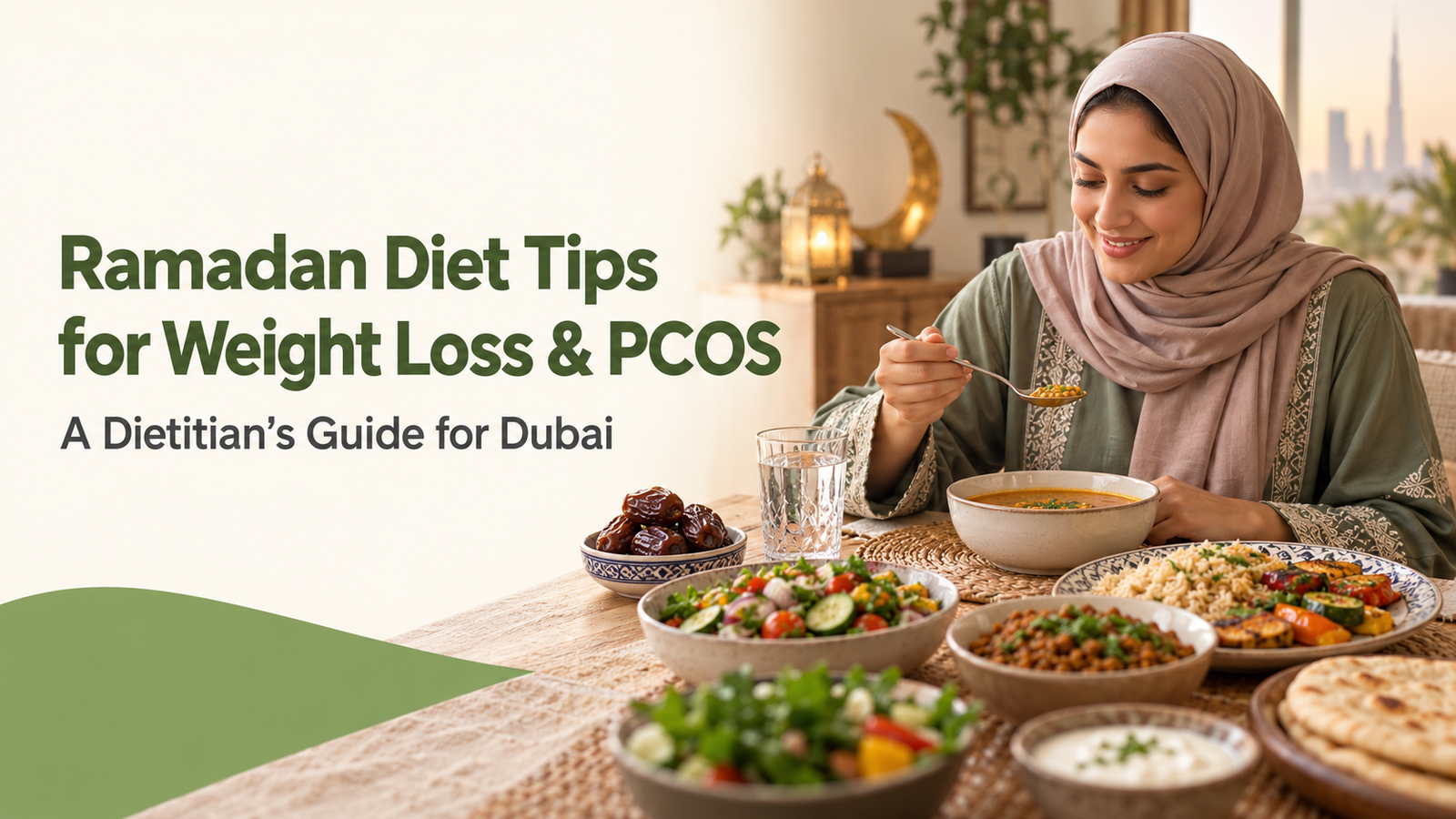
- Break your fast with water, one to three dates and a light soup, then a balanced plate.
- Spread six to eight glasses of water between iftar and suhoor.
- With PCOS, pair carbohydrates with protein and keep sweets small and occasional.
- If you have diabetes, are pregnant or take regular medication, check with your doctor before fasting.
Ramadan is a time of reflection, family and community, and for many people in Dubai it also brings a big change in eating and sleeping patterns. Long fasting hours, late iftar gatherings and sweet treats can make it easy to gain weight or feel tired. With a little planning, though, Ramadan can be a month where you feel lighter, more energetic and more in control of your health, including if you are managing PCOS.
Here is a practical guide from our Dietitian & Nutritionist on how to plan your suhoor and iftar, stay hydrated and keep your goals on track.
Why Ramadan can affect your weight and hormones
When you fast, your body goes many hours without food or water. What you eat in the short window between iftar and suhoor matters a lot. A large, rich iftar followed by sweets and late-night snacks can cause sharp rises and falls in blood sugar. For women with PCOS, who often have some degree of insulin resistance, these swings can increase cravings, fatigue and bloating.
Sleep also changes. Late nights and early suhoor mean less rest, and poor sleep is linked with stronger hunger and sugar cravings the next day. The goal is not to eat less at all costs, but to eat in a way that keeps your energy and blood sugar steady.
Suhoor: build a meal that lasts
Suhoor is the meal that carries you through the day, so it should be slow to digest. Try not to skip it, even if you are not hungry.
- Choose complex carbohydrates: oats, wholegrain bread, brown rice, millet or a small portion of whole-wheat flatbread release energy slowly.
- Add protein: eggs, Greek yoghurt, labneh, paneer, cheese, lentils or chickpeas help you feel full for longer.
- Include fibre: vegetables, chia seeds, flaxseeds and a piece of whole fruit support digestion and steady blood sugar.
- Add some healthy fat: a few nuts, seeds, olive oil or avocado.
- Go easy on salt: salty foods such as pickles, processed cheese and salty snacks can make you thirstier during the day.
Example suhoor: overnight oats made with milk or yoghurt, chia seeds and berries, plus two boiled eggs and two to three glasses of water.
Iftar: break your fast gently
After a long fast it is natural to feel very hungry, but eating too much too fast often leads to discomfort and overeating. A simple approach works well:
- Start with water and one to three dates. Dates give quick energy and fibre. Keep the portion small if you are watching your weight or blood sugar.
- Have a light soup or salad. Lentil soup, vegetable soup or a fresh salad helps you rehydrate and slows you down.
- Pause for a few minutes, then have your main meal.
- Use the balanced plate: half the plate vegetables, a quarter protein (grilled chicken, fish, eggs, dal, beans or paneer) and a quarter complex carbohydrates (brown rice, whole-wheat roti, bulgur or potatoes with skin).
Fried snacks such as samosas, pakoras and sambousek are a big part of many iftar tables. You do not need to avoid them completely; simply choose one or two pieces, or try baked or air-fried versions at home.
Between iftar and suhoor: hydration comes first
Dehydration is one of the main reasons people feel tired and get headaches while fasting, especially when Ramadan falls in warmer months in the UAE. Aim to spread your water through the evening rather than drinking a lot at once:
- Two glasses at iftar
- Two to three glasses between iftar and bedtime
- Two glasses at suhoor
Water-rich foods such as cucumber, watermelon, tomatoes, oranges and laban also help. Sweetened Ramadan drinks, packaged juices and fizzy drinks add a lot of sugar, so keep them as an occasional treat. Strong tea and coffee can make you lose more fluid, so limit them, especially at suhoor.
Extra tips if you have PCOS
- Pair carbohydrates with protein at every meal so sugar is absorbed more slowly.
- Keep sweets small and occasional, and have them after a balanced meal rather than on an empty stomach.
- Do not skip suhoor. A very long gap with no food can lead to overeating at iftar.
- Keep moving: a gentle 20 to 30 minute walk after iftar helps your body use blood sugar better.
- Protect your sleep where you can, for example with a short afternoon rest.
Exercise during Ramadan
Light to moderate activity is usually best while fasting. Good times are just before iftar, so you can eat and drink soon after, or one to two hours after iftar. Walking, yoga, stretching and light strength training are good options. Avoid intense workouts in the heat or when you are very dehydrated.
Who should speak to their doctor first?
Fasting is not suitable for everyone. If you have diabetes, are pregnant or breastfeeding, have kidney problems, or take medication for blood sugar, thyroid, blood pressure or PCOS, speak to your doctor before Ramadan about whether fasting is safe for you and whether medication timings need to change. A Dietitian & Nutritionist can then help you plan meals around that advice.
Enjoying Eid without undoing your progress
Eid is a celebration, and food is part of it. Enjoy your favourite dishes, but keep portions mindful, fill half your plate with salads and vegetables, stay hydrated and get back to regular meal times within a day or two.
Frequently asked questions
Can I lose weight during Ramadan?
Yes, many people do, as long as iftar and suhoor are balanced and late-night snacking is kept in check. Aim for steady, gentle progress rather than rapid weight loss.
How many dates should I eat at iftar?
One to three dates is a sensible amount for most people. If you have diabetes or PCOS, keep it to one or two and pair them with water and a light soup.
Is it okay to skip suhoor?
It is better not to. Skipping suhoor makes the fast longer and harder and often leads to overeating at iftar.
What should I drink at suhoor?
Plain water is best. Milk, laban or a small smoothie with yoghurt can also help. Limit strong tea and coffee.
Want a plan made for your routine in the UAE?
Dt. Nazish Akhtar, Dietitian & Nutritionist, offers online consultations for clients in Dubai and across the UAE, with personalised weight loss and PCOS programmes built around the food you already eat.
This article is for general information and does not replace advice from your doctor. If you have a medical condition or take regular medication, speak to your doctor before changing your diet.
